India`s Growth Resilience Meets El Niño and Rate Risks as Festive Season Recovery Offers Support: PL Wealth

PL Wealth’s latest Market Outlook – September 2026 report finds that India’s growth momentum remains resilient, supported by a strong Q1FY27 GDP print, returning foreign portfolio investor (FPI) flows, robust domestic liquidity and a healthy capital expenditure cycle. However, a persistent monsoon deficit, rising El Niño risks, elevated crude prices and the possibility of a 25–50 bps policy rate hike in H2FY27 could create near-term volatility, reinforcing the case for selective stock-picking and staggered deployment.
India’s Q1FY27 GDP growth stood at 7.8%, driven by robust investment, with GFCF growing 11.9%, while industry, manufacturing and services expanded 8.6%, 9.2% and 10.0% respectively. Non-food bank credit growth accelerated to 19.1% YoY as of July 2026, while capacity utilisation remained healthy at 75.2%, above its long-term average. GST collections also remained strong, with August gross collections rising 14.8% YoY to Rs1.99 lakh crore.
Inflation, however, remains a key watch point. July CPI stood at 4.45%, with food inflation at 5.52%, while core inflation remained at 3.9%. The RBI has revised its FY27 CPI projection to 5.0%, with Q3 inflation expected to peak at 5.9%. PL Research believes this estimate could be at risk of being breached given the evolving El Niño dynamics. Brent crude averaged around US$90–93 per barrel during August and closed at approximately US$93 per barrel at month-end, adding further pressure to inflation and margins.
Foreign investor flows have provided a positive signal, with FPIs turning net buyers for the second consecutive month and purchasing around US$3 billion of Indian equities in August. DIIs also continued to provide strong liquidity support, with purchases of approximately US$6 billion during the month. The report notes that the combination of sustained domestic buying and returning FPI confidence provides a meaningful cushion to the market.
The monsoon remains an important risk factor. The cumulative monsoon deficit stood at 13% as of August 26, with 16–17 meteorological subdivisions in deficient territory, while Kharif sowing remained 2% below normal. The report highlights that a strengthening El Niño could result in a global agricultural commodity spike across sugar, palm oil, coffee, cocoa and soybean, potentially putting further pressure on food inflation and rural demand.
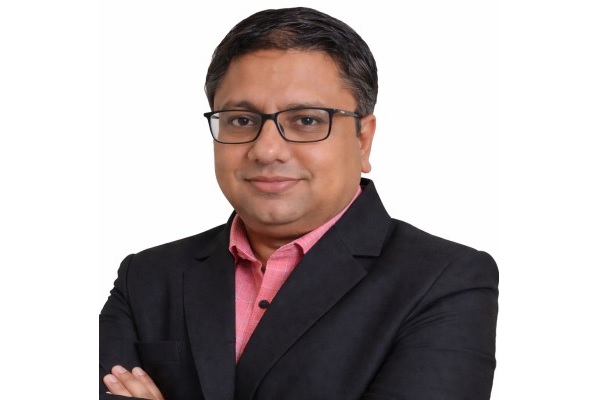
Speaking on the findings, Inderbir Jolly, CEO, PL Wealth, said:
“India’s growth fundamentals remain encouraging, with a strong Q1FY27 GDP print, healthy credit growth, robust capital expenditure and returning foreign investor flows providing support to the economy and markets. At the same time, the monsoon deficit, rising El Niño risks, elevated crude prices and the possibility of a rate hike warrant a measured approach in the near term. We believe investors should focus on quality businesses, diversify across market capitalisations and deploy capital in a staggered manner rather than take broad-based market exposure. Over the medium to long term, India’s structural growth story remains intact, supported by demographics, financial deepening, domestic capex, defence indigenisation and the continued formalisation of the economy.”
Macro Environment
India’s macroeconomic backdrop remains resilient despite emerging inflationary and external risks. Q1FY27 GDP growth at 7.8% was supported by strong investment and broad-based industrial and services activity. GFCF grew 11.9%, while capacity utilisation at 75.2% remains above the 74% long-run average, pointing towards potential fresh capacity additions.
Non-food bank credit growth accelerated to 19.1% YoY as of July 31, 2026. The RBI’s FCNR deposit window, which closed on August 31, mobilised approximately US$127 million and added around 2.5–3% of system deposits in liquidity. Forex reserves recovered from approximately US$667 billion to US$717 billion, providing around 10.7 months of import cover and helping stabilise the rupee.
GST collections remained strong, with August 2026 gross collections at Rs1,99,853 crore, up 14.8% YoY and approaching the Rs2 lakh crore milestone.
On the inflation front, July CPI stood at 4.45%, with food and beverages inflation at 5.52%, while core CPI remained at 3.9%. The RBI’s FY27 CPI projection stands at 5.0%, with Q3 expected to peak at 5.9%. PL Research believes the Q3 peak could be breached if El Niño conditions strengthen. Brent crude closed August at approximately US$93 per barrel, with every US$10 per barrel increase estimated to add around 30 bps to headline CPI.
Market Valuation & Positioning
The domestic equity market remains characterised by selective momentum, with mid- and small-cap segments demonstrating resilience while large-cap indices have remained under pressure. The Nifty 50 stood at 24,208 as of August 26 and trades at 17.3x one-year forward earnings, representing an 11.7% discount to its 15-year average PE of 19.6x and a 14.8% discount to its 10-year average of 20.3x.
PL Research’s FY28E Nifty EPS stands at Rs1,537, implying 14.0% YoY growth. The 12-month base-case Nifty target of 27,123, based on 17.6x FY28E EPS, implies approximately 12% upside from current levels. India’s valuation premium to emerging markets is also at a 10-year low, presenting a relatively attractive entry point for long-term allocators.
Q1FY27 earnings have started on a broadly positive note. The PL coverage universe reported sales, EBITDA and PAT growth of 21.1%, 1.7% and 3.7% YoY respectively, while PAT growth excluding Oil & Gas stood at 17%, the strongest since Q4FY24. The report notes positive earnings surprises across Banks, Metals, Telecom and Healthcare. However, elevated imported raw material inventories could put pressure on margins in Q2 and Q3.
PL Wealth maintains a selective approach across sectors and market capitalisations. The PL Model Portfolio remains overweight on Banks, Capital Goods and Defence, Diversified Financials, Metals, Healthcare, Telecom and Ports, while maintaining an underweight stance on IT Services, Auto, Consumer and Oil & Gas.
Equity Markets – An Overview and Approach
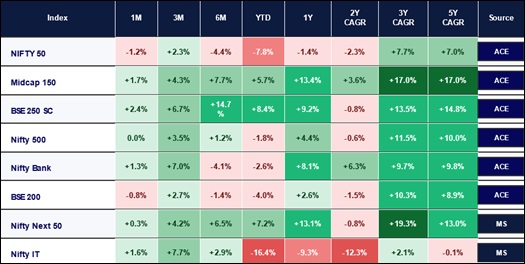
Short Term (0 to 6 months): PL Wealth remains selectively constructive, with FPIs turning net buyers for two consecutive months and DIIs continuing to provide strong domestic liquidity support. Valuations remain reasonable relative to historical averages, limiting meaningful downside. However, crude prices near US$93 per barrel and the El Niño-driven monsoon deficit remain key near-term overhangs for margins, inflation and rural demand. The report favours staggered deployment into quality large-cap and diversified equity strategies, with a preference for stock-picking over passive index exposure.
Medium Term (6 to 24 months): The medium-term outlook is supported by strong domestic credit growth, the capital expenditure cycle and faster earnings growth across mid- and small-cap segments. Bank credit growth of 19.1% YoY, GFCF growth of 11.9% and continued investment in areas such as defence, power, renewables, data centres and semiconductors provide structural support. PL Wealth favours large private banks, capital goods and consumer durables, alongside selective exposure to quality small-cap, flexi-cap and multi-cap strategies.
Long Term (24 months+): PL Wealth remains overweight on India, with the structural investment case supported by demographics, financial deepening, domestic capex, defence indigenisation and Make in India. The report also highlights emerging high-growth areas such as EVs, defence, renewables, capital markets and digital businesses as potential sources of long-term alpha. For long-term investors, the report favours mid-cap, small-cap, infrastructure and defence-oriented themes, alongside flexi-cap strategies.
Fixed Income Outlook
On fixed income, PL Wealth adopts a cautious approach, with the dominant strategy being Accrual Over Duration. The RBI repo rate remains at 5.25% with a neutral stance, while the FCNR mobilisation of approximately US$127 million has added significant system liquidity and helped anchor the front end of the yield curve.
However, PL India Strategy flags a material probability of a 25–50 bps RBI rate hike in Q3 or Q4FY27, contingent on El Niño-driven food inflation and crude oil prices. This makes outright duration positioning premature.
PL Wealth remains overweight on the 3-month to 3-year segment, where attractive accrual and limited duration risk provide a favourable risk-adjusted opportunity. CDs are offering approximately 7.0–7.5%, while CPs are offering around 7.3–7.8%. The 5–8 year segment remains a tactical opportunity, particularly on yield spikes, while the long end remains neutral/selective given the potential for rate hikes.
The overall fixed-income strategy remains focused on the short end, with a tactical allocation to the belly of the curve, while maintaining strict credit discipline and favouring AAA and sovereign exposure.
Fund Category Positioning
The current market environment of mid- and small-cap earnings outperformance, returning FPI flows, supportive domestic liquidity and relatively attractive valuations calls for an alpha-oriented and actively managed approach.
PL Wealth maintains an Overweight stance on Flexi Cap/Multi Cap, Large & Mid Cap, Mid Cap, Banking & Financial Services and Infrastructure/Defence thematic categories. The report highlights these categories as beneficiaries of the earnings-growth cycle, domestic capex and structural themes.
Large Cap funds remain Neutral, with a preference for active quality large-cap exposure over passive strategies. IT/Technology sectoral funds remain Underweight, given AI-related disruption risks, slower revenue growth and continued weakness in the IT segment.
Within debt categories, PL Wealth remains Overweight on Overnight/Liquid/Money Market, Low Duration/Short Duration and Banking & PSU Debt funds, while maintaining a Neutral stance on Corporate Bond/Medium Duration and Gilt/Long Duration categories.
Key Risks and Opportunities
The key risk remains the monsoon and El Niño outlook. A cumulative 13% monsoon deficit and deficient rainfall across several meteorological subdivisions could affect Kharif output, farm incomes and rural demand. A stronger El Niño could also trigger a rise in global agricultural commodity prices, increasing the risk of an inflation overshoot.
The potential for a 25–50 bps RBI rate hike in H2FY27 is another important risk, particularly if crude prices remain elevated and food inflation accelerates. Margin pressure in Q2 and Q3 earnings also remains a concern as companies work through imported raw material inventories purchased at higher prices.
At the same time, the August–November festive season provides a potential positive catalyst for automobiles, consumer durables, jewellery and real estate. Strong GST collections, stable domestic liquidity, returning FPI flows and India’s relatively attractive EM valuation could provide further support to markets.
Overall, PL Wealth believes the current environment favours selectivity, active management, quality businesses and staggered deployment, while maintaining a constructive medium- to long-term view on India’s structural growth opportunity. From a wealth allocation perspective, PL Wealth believes investors should adopt a diversified and active asset allocation approach, balancing equities and fixed income based on risk appetite and investment horizon. Within equities, the preference remains towards Flexi Cap/Multi Cap, Large & Mid Cap, Mid Cap, Banking & Financial Services and Infrastructure/Defence-oriented strategies, while in fixed income, the focus remains on Overnight/Liquid/Money Market, Low Duration/Short Duration and Banking & PSU Debt categories. Given the potential for near-term volatility, staggered deployment, disciplined rebalancing and a focus on quality assets remain key to navigating the current market environment while capturing India’s long-term structural growth opportunity.
Above views are of the author and not of the website kindly read disclaimer

.jpg)











Tag News

India Strategy : The In and Out of FII flows: Sentiment sours again! by Motilal Oswal Finan...