


India`s economy to remain resilient in 2026-27 despite global challenges: Reserve Bank of India

The Indian economy is expected to remain resilient in 2026-27, despite the challenging external environment characterised by elevated energy and commodity prices, rising logistics costs, volatility in global financial markets and uncertainties surrounding global trade policies, according to the RBI annual report released on Friday.
Growth prospects are supported by India’s strong macroeconomic fundamentals, including robust domestic demand, relatively lower dependence on exports as a growth driver, and a stable policy environment, according to the report.
The healthy balance sheets of the corporate and banking sectors, along with the government’s continued thrust on capital expenditure, bode well for India’s strong growth trajectory.
Moreover, the implementation of various trade agreements with the key trading partners would provide further momentum to India’s growth. However, a prolonged West Asia conflict may pose a downside risk, it said.
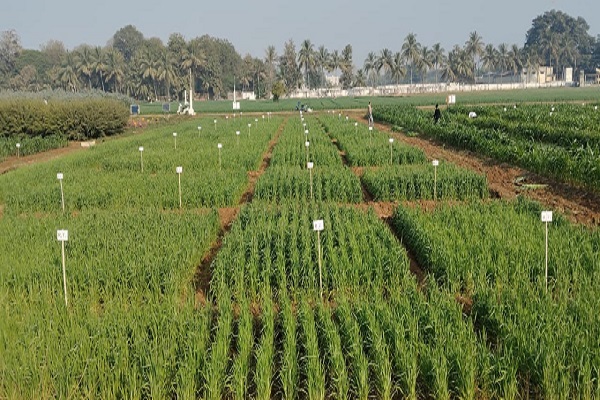
It further stated that the outlook for the agriculture sector in 2026-27 remains contingent upon the progress and distribution of the south-west monsoon. The likelihood of El Nino conditions poses downside risks to agricultural output.
However, the rain-inducing positive Indian Ocean Dipole (IOD) conditions are likely to emerge towards the latter part of the monsoon season, which may partly offset adverse impacts.
While the monsoon remains critical for Indian agriculture, the sensitivity of agricultural production to rainfall variability has moderated over time with rising irrigation intensity, improved crop management practices, and technological advancements.
The government’s continued efforts in ensuring adequate availability of fertiliser and other key inputs through diversified sources and buffer management are expected to mitigate these potential concerns.
Initiatives announced in the Union Budget 2026-27, focusing on diversification, targeted promotion of high-value crop cultivation across regions, and enhancing commercial viability of fisheries and aquaculture, would support strong and sustainable growth in the agriculture and allied sectors, the report said.
The report has highlighted that to reinforce India’s manufacturing ambitions, the Union Budget 2026-27 has earmarked seven strategic and frontier sectors -- electronics, semiconductors, biopharma, rare earths, chemicals, textiles, and capital goods -- for a focused policy push.
Complementing this, measures such as PLI and PM E-DRIVE to strengthen energy security are expected to catalyse green tech manufacturing and reduce critical import dependence, while investments in freight corridors, waterways, coastal shipping and last-mile connectivity would deepen regional integration and support industrial expansion.
Labour market conditions are expected to improve further, supported by the full-scale implementation of the four labour codes, strengthening domestic demand and productivity.
Considering these factors, and assuming that the adverse impact of the West Asia conflict remains contained in the near term, real GDP growth for 2026-27 is projected at 6.9 per cent, with risks tilted to the downside, the report stated.
On the receipts side, direct taxes are budgeted at 6.9 per cent of GDP in 2026-27, the highest in more than a decade.
GFD is projected at 4.3 per cent of GDP in 2026-27, reflecting the Centre’s continued fiscal consolidation efforts in recent years.
The government has set up an Economic Stabilisation Fund (ESF) to provide fiscal space against global headwinds.
Fiscal outlook for states remains positive for 2026-27, with their consolidated GFD budgeted at 3.0 per cent of gross state domestic product (GSDP).
In terms of inflation, 2026-27 is likely to remain aligned with the target on the back of adequate foodgrain stocks, sufficient reservoir levels and stable agricultural prospects despite possible El Nino conditions and above-normal summer temperature.
However, the evolving upside risks to inflation may emanate from multiple other factors, such as a spike in global fuel and commodity prices amid geopolitical tensions, potential spillovers to input and wage costs, and volatility in the exchange rates.
Considering all these factors, CPI inflation for 2026-27 is projected at 4.6 per cent with risks tilted to the upside, the report stated.








.jpg)








.jpg)