How Driver-Assistance Features Can Support Safer Driving
Modern cars are increasingly equipped with driver-assistance technologies designed to help drivers deal with common situations on the road. These systems can monitor surroundings, provide warnings, and in some cases assist with steering or braking.
Driver-assistance features are not a replacement for an attentive driver. Their main purpose is to provide an additional layer of support and help reduce the impact of certain driving risks.
What Are Driver-Assistance Features?
Driver-assistance systems use cameras, radar, sensors, and software to understand parts of the vehicle's surroundings.
Depending on the vehicle, these systems may warn the driver about nearby vehicles, help maintain a lane, assist during parking, or apply braking in specific situations.
The exact capabilities vary between car models, so drivers should understand what their vehicle's individual systems can and cannot do.
Automatic Emergency Braking
Automatic Emergency Braking, often called AEB, is designed to help in situations where a collision may be imminent.
The system can detect certain obstacles or vehicles and provide a warning. In some situations, it may automatically apply the brakes if the driver does not respond quickly enough.
This can be particularly useful when a driver fails to notice a developing hazard.
Lane Departure Warning
Lane Departure Warning monitors road markings and alerts the driver when the vehicle begins moving out of its lane unintentionally.
This can be helpful when distractions, fatigue, or momentary lapses in attention cause the vehicle to drift.
Drivers still need to keep their eyes on the road and maintain proper control of the vehicle.
## Lane-Keeping Assistance
Lane-Keeping Assistance can go a step further by providing steering input to help keep the vehicle within its lane.
The system is generally intended as a support feature rather than a system that allows the driver to stop paying attention.
Road markings, weather conditions, and other factors can affect how well the feature operates.
Blind-Spot Monitoring
Blind-spot monitoring helps detect vehicles traveling in areas that may be difficult for the driver to see directly.
A warning light or other alert can notify the driver when another vehicle is present in the blind spot, which can be useful when changing lanes.
Even with this feature, drivers should continue checking mirrors and surroundings before changing lanes.
Adaptive Cruise Control
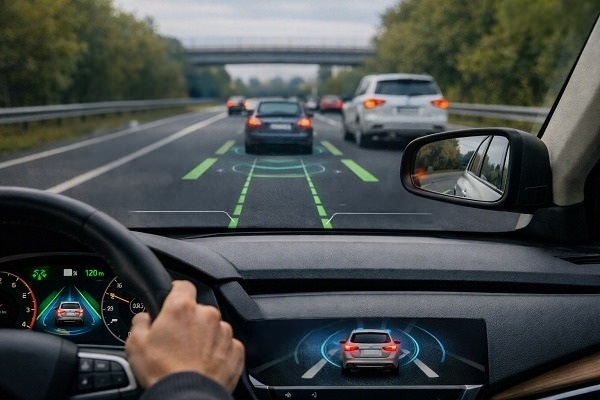
Adaptive Cruise Control automatically adjusts the vehicle's speed to maintain a selected following distance from traffic ahead.
Compared with traditional cruise control, it can reduce the need for repeated manual speed adjustments during certain highway-driving situations.
However, the driver remains responsible for monitoring traffic and responding to changing road conditions.
Forward Collision Warning
Forward Collision Warning uses vehicle sensors to identify situations where the car may be getting too close to an object or vehicle ahead.
The system can provide a visual, audio, or other warning to encourage the driver to react.
The warning gives the driver additional awareness but does not remove the need for careful observation.
Rear Cross-Traffic Alert
When reversing out of a parking space, it can be difficult to see vehicles approaching from the side.
Rear Cross-Traffic Alert can detect some approaching traffic and warn the driver. This can provide useful extra awareness in busy parking areas.
Drivers should still check mirrors, cameras, and the surrounding area before reversing.
## Parking Assistance and Cameras
Parking cameras and sensors can make low-speed manoeuvring easier by helping drivers judge distances and identify nearby obstacles.
Some vehicles also offer automated parking systems that can control steering during certain parking manoeuvres.
These technologies can be useful, but drivers should remain ready to brake or take control whenever necessary.
Driver Monitoring Systems
Some newer vehicles use cameras or other sensors to monitor signs of driver attention.
Depending on the system, the vehicle may issue warnings when it detects that the driver's attention appears to be reduced or that the driver may not be responding appropriately.
These systems can provide another safety reminder, but they are not a substitute for proper rest and attentive driving.
Why Drivers Should Not Become Overconfident
One of the biggest misunderstandings about driver-assistance technology is assuming that the car can handle every situation.
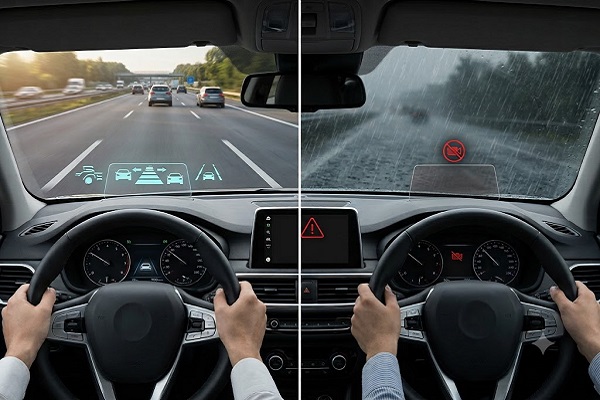
Sensors may not work perfectly in heavy rain, fog, snow, poor visibility, dirty conditions, faded lane markings, or unusual road situations. Different systems also have different operating limits.
Reading the vehicle manual and understanding those limitations is an important part of using these technologies safely.
Driver Assistance Is Not Fully Autonomous Driving
Terms such as "assistance," "automation," and "autonomous driving" are sometimes used interchangeably, but they do not necessarily describe the same level of capability.
Many driver-assistance systems require the driver to remain alert, monitor the road, and be prepared to take immediate control.
A driver should never assume that activating an assistance feature means they can stop paying attention.
How to Use These Features Responsibly
The safest approach is to treat driver