From ADAS to Fully Autonomous Cars: The Evolution of Driving Technology
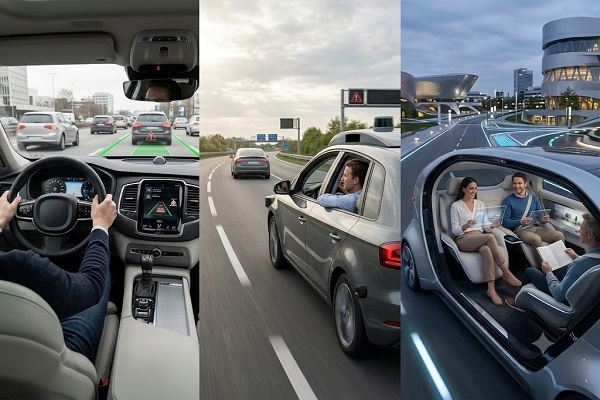
The automobile industry is undergoing a major technological transformation. Cars are no longer limited to engines, transmissions and mechanical components. Modern vehicles increasingly rely on cameras, radar, sensors, artificial intelligence and advanced software to assist drivers and improve road safety.
One of the most important developments in this journey is the transition from Advanced Driver Assistance Systems (ADAS) toward increasingly automated driving. While fully autonomous cars are still developing, today's driver-assistance technologies provide a glimpse of how driving could change in the future.
What Is ADAS?
ADAS stands for Advanced Driver Assistance Systems. These technologies are designed to support the driver rather than completely replace them.
Depending on the vehicle and system, ADAS can provide features such as:
Adaptive Cruise Control
Lane Departure Warning
Lane Keeping Assist
Automatic Emergency Braking
Blind Spot Monitoring
Forward Collision Warning
Traffic Sign Recognition
Driver Attention Monitoring
Parking Assistance
These systems use a combination of cameras, radar, ultrasonic sensors and other technologies to monitor the vehicle's surroundings.
The Evolution From Basic Assistance to Automation
The development of automated driving has taken place gradually. Early systems focused mainly on warning drivers about potential hazards. Over time, manufacturers introduced technologies capable of controlling certain vehicle functions.
For example, cruise control initially maintained a fixed speed. Adaptive Cruise Control later added the ability to adjust speed according to traffic ahead.
Similarly, parking assistance evolved from simple proximity warnings into systems that can automatically control steering during parking manoeuvres.
This progression shows how vehicle technology is moving from warning the driver toward assisting with specific driving tasks.
Understanding Different Levels of Driving Automation
The Society of Automotive Engineers (SAE) classification commonly describes driving automation from Level 0 to Level 5.
Level 0 – No Driving Automation
At Level 0, the driver remains responsible for driving. The vehicle may still provide warning or emergency-assistance functions, but it does not continuously control driving.
Level 1 – Driver Assistance
Level 1 systems can assist with either steering or acceleration and braking under specific conditions. Adaptive Cruise Control and lane-centering assistance are examples of technologies that can contribute to this level.
Level 2 – Partial Driving Automation
Level 2 systems can control steering and acceleration/braking simultaneously under certain conditions. However, the driver must remain attentive and responsible for the vehicle.
Many advanced driver-assistance packages available today fall within this category.
Level 3 – Conditional Driving Automation
At Level 3, the automated driving system can perform the driving task under defined conditions. The driver may be able to temporarily stop actively controlling the vehicle, but must be prepared to take over when requested.
Level 4 – High Driving Automation
Level 4 vehicles can perform driving tasks without human intervention within specific operational conditions or designated areas. Human control may still be necessary outside those conditions.
Level 5 – Full Driving Automation
Level 5 represents complete driving automation. A vehicle would theoretically be capable of operating without a human driver under all road and environmental conditions covered by the system.
This remains a significant technological challenge.
The Role of Cameras, Radar and LiDAR
Autonomous driving depends heavily on a vehicle's ability to understand its surroundings.
Cameras can identify lane markings, traffic signs, vehicles, pedestrians and other visual information.
Radar can measure the distance and relative movement of objects and can be useful in conditions where visibility is reduced.
LiDAR, or Light Detection and Ranging, uses laser pulses to create detailed information about the vehicle's surroundings. It is being explored and used in various automated-driving applications.
Modern systems can combine information from multiple sensors through a process known as sensor fusion, helping the vehicle build a more comprehensive picture of its environment.
Artificial Intelligence Is Becoming Increasingly Important
Artificial intelligence and machine learning play an important role in advanced driving systems. Software can process large amounts of information from cameras and other sensors to identify objects and interpret road situations.
The vehicle must distinguish between different road users, understand traffic conditions and determine appropriate actions based on the system's capabilities.
As computing power and software technology improve, vehicles are becoming better equipped to process complex driving environments.
Why ADAS Is Important for Road Safety
ADAS is primarily intended to support drivers and reduce the possibility or severity of certain collisions.
For example, forward collision warning can alert a driver when a potential collision is detected, while automatic emergency braking may apply the brakes in specific situations.
Lane departure warnings can alert drivers when a vehicle unintentionally moves out of its lane. Blind-spot monitoring can provide additional awareness when another vehicle is difficult to see using conventional mirrors.
However, these technologies have limitations. Drivers should not assume that an ADAS-equipped vehicle is fully self-driving.
Challenges on the Road to Fully Autonomous Cars
Developing a vehicle capable of handling every possible road situation is extremely difficult.
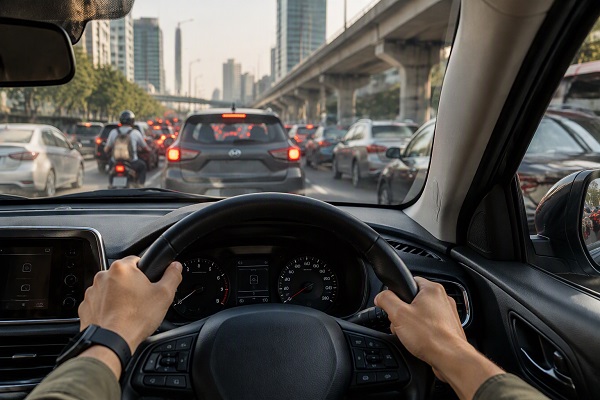
Road environments can be unpredictable. Vehicles must deal with pedestrians, cyclists, motorcycles, road construction, unclear lane markings, unusual traffic behaviour, poor weather and unexpected obstacles.
Indian roads can present additional challenges because of highly varied traffic patterns, mixed road users and changing road conditions.
Another major challenge is ensuring that automated systems work reliably in different environments and respond appropriately when sensors or software encounter situations they have not been designed to handle.
Cybersecurity and Software Reliability
As vehicles become more software-driven and connected, cybersecurity is becoming an important part of automotive development.
Autonomous and connected vehicles need protection against unauthorised access and potential software vulnerabilities. Manufacturers also need robust systems for testing, monitoring and updating vehicle software.
Software reliability is equally important because automated driving systems may be responsible for making safety-critical decisions.
What Could Fully Autonomous Cars Change?
If highly automated driving becomes widely available, it could influence several aspects of transportation.
Long highway journeys could become less demanding for occupants. Parking could become more automated, while shared autonomous vehicles could potentially change how some people use cars.
Autonomous technology could also contribute to new mobility services, including driverless transportation in controlled environments.
However, the impact will depend on technology, regulations, infrastructure, consumer acceptance and the ability of these systems to operate safely at scale.
The Road Ahead
The evolution from ADAS to autonomous driving is not happening overnight. It is a gradual process in which individual driving tasks are increasingly supported or automated.
Today's vehicles already demonstrate many elements of this technology through adaptive cruise control, lane assistance, automatic braking and automated parking.
The next stage will involve improving the ability of vehicles to understand complex environments, make reliable decisions and operate safely with less human intervention.
Fully autonomous cars remain a longer-term goal, but the technologies being developed today are steadily shaping the future of mobility.
Conclusion
The journey from basic driver assistance to fully autonomous driving represents one of the biggest technological changes in the automotive industry. ADAS has introduced drivers to features that can monitor roads and assist with specific driving tasks, while advanced automation is pushing the industry toward vehicles capable of handling increasingly complex situations.
The future of driving will likely depend on a combination of AI, sensors, software, connectivity and improved vehicle safety systems. While fully autonomous cars still face technological and regulatory challenges, the evolution has already begun.