Foreign flows have returned, but domestic savings remain the anchor: PL Capital AMC

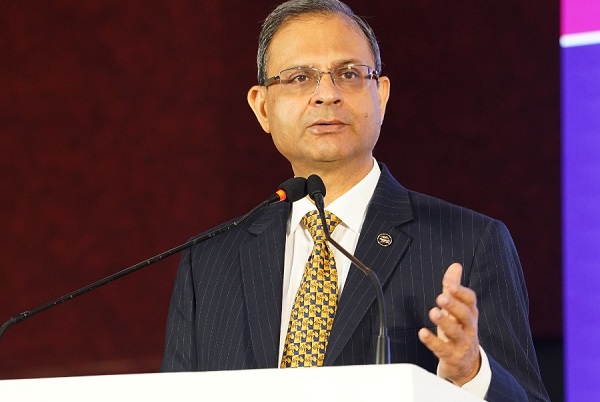
Foreign investors have returned to Indian equities in force, but domestic savings remain the anchor of the market, according to Sandeep Neema, Chief Investment Officer – Equities, PLAMC. Foreign institutional investors have been net buyers for 16 straight sessions, with November inflows of about Rs 1.29 lakh crore (around $14.7 billion), nearly double the previous monthly record set in November 2020. Yet foreign ownership of Indian equities is at a 21-year low of 14.7%, and monthly SIP flows above Rs 32,000 crore continue to give the market a steady domestic cushion.
FIIs have returned, but domestic flows set the floor
The 16-session buying streak is the longest since 2023, and the inflows have lifted the rupee to an eight-month high.
"DIIs built the floor; FIIs will decide the pace of the rally. Foreign ownership is at a 21-year low of about 14.7%, so positioning remains light. Domestic funds supplying stock to foreign buyers is healthy rather than worrying; it shows India is no longer a one-way market. Domestic flows are steady, while foreign flows are cyclical and global. FIIs move the market in the short term, but domestic savings set the floor."
Large caps offer value; mid and small caps offer growth
"Large caps bring stability; mid and small caps bring growth. The rally has been led by foreign investors, who buy large, liquid names first, which is why the banking index has gained over 14% this month and hit a record high. The Nifty trades at about 17 times forward earnings, below its long-term average of around 21 times, while small caps still trade at a premium on some measures. In past recoveries, gains have often broadened once confidence settles. Selection matters most among smaller companies."
A recovery built on earnings, valuations and flows
The Nifty is up about 12% in November and is within about 2% of its record high, having rallied about 17% from its October low. Nifty 50 companies reported 27% profit growth in the September quarter, the fastest in 17 quarters. GDP grew 7.8% in the first quarter, the RBI has raised its FY27 growth forecast to 7.1%, and crude is down over 22% from its March peak.
"The fundamentals moved first, so the market is catching up with earnings rather than running ahead of them. When earnings, valuations and both sets of investors line up, recoveries tend to be more durable. The risks to watch are global: AI-linked volatility, US interest rates, crude and the proposed US tariffs on Indian exports. We would encourage investors to deploy fresh money in a staggered manner and keep it aligned to their asset allocation."
AI: a transformative technology, but parts of its pricing ran ahead
AI-linked stocks have corrected sharply since early October, with some of the biggest names down 30% or more from their peaks. By mid-November, India had drawn about $10 billion of foreign inflows, while South Korea saw outflows of $9.3 billion and Taiwan nearly $21 billion.
"The technology is an industrial revolution, but parts of its stock-market pricing ran well ahead of reality. What investors are questioning is not whether AI is real, but how much they paid for it. India is not an AI-hardware market, so it has emerged as a diversifier: on 25 November, when Korea fell over 6% and Taiwan nearly 5%, the Nifty rose almost 2%. The lesson is concentration risk. When everyone owns the same theme, a correction hits everyone together."
Technology should bring discipline, not excitement
"Quantitative strategies can evaluate valuation, earnings quality, momentum and risk across a far wider universe, but the real value lies in a repeatable, evidence-based process tested across market cycles. Investors should understand why a strategy buys and sells, watch for the back-test trap, and prefer SEBI-regulated vehicles such as PMS, mutual funds, AIFs and specialised investment funds over unregulated apps or social-media 'AI tips'. Technology cannot replace asset allocation across equity, debt and gold."
Sandeep Neema, Chief Investment Officer – Equities, PLAMC said “: "India enters this phase with earnings, valuations and domestic savings all supportive, but global risks have not gone away. Investors are better served by staying disciplined: diversify across equity, debt and gold, deploy fresh money in a staggered manner, and keep investments aligned to goals and risk appetite. Technology can make that process more consistent and transparent, but it cannot replace it.”
Above views are of the author and not of the website kindly read disclaimer