FOMC Meeting Review : The Energy Squeeze: Fed Blinks, Japan's Next, India Can't Wait by Choice Instituional Equities Ltd

Key Takeaways -
* The Fed has stopped looking through energy - A 12-0 vote lifted the funds rate 25bps to 3.75-4.00%, the first hike since July 2023, into a supply-driven inflation impulse it would normally ignore. The move is defensive, not confident: a Fed haunted by the 2021-22 "transitory" error is buying credibility insurance, accepting the risk of over-tightening to avoid being late twice.
* The dot plot is hawkish up front, split underneath - All 16 submitted dots see at least one more hike in 2026, but 2027 fractures into hikes, holds, and cuts. The signal is a short, sharp, shallow cycle, and a median resting on a few swing dots carries less conviction than the headline suggests.
* The SEP quietly concedes lost ground - Headline PCE is nudged to 3.7% for 2026, core to 3.4%, with 2% inflation not expected until 2029. Disinflation is backloaded to 2027 on the assumption that energy normalises; a firmer 4.1% unemployment rate removes the excuse to look through the shock.
* This is a synchronised global turn - The BoJ is set to hike to 1.25%, removing the world's last anchor of cheap funding. Central bank tone has shifted from easing to vigilance on the same energy-plus-wages thread, and global yields are the transmission belt, with the US 10-year beyond 5% and Japan's past 3%.
* India's MPC now looks sooner and harder - With the Fed and BoJ both hiking narrowing the rate differential, CPI nearing 5% and climbing toward 6%, and negative real rates increasingly untenable, the extendedpause base case is gone. We expect a pivot toward a meaningfully positive real rate, repo nearer 6.5%, with the early-October meeting the first place to watch.
* Position for a higher cost of capital - A resetting risk-free rate compresses valuations and keeps FII flows hesitant. The G-sec front end is most exposed, the rupee stays pressured despite hikes serving as currency defence, and long-duration growth equities carry the most downside while energy and commodity names hold up in relative terms. The tail worth hedging: every disinflation path assumes energy behaves, and a persistent West Asia supply shock would make the tightening deeper and longer than priced.
The decision, and why it deserves scrutiny
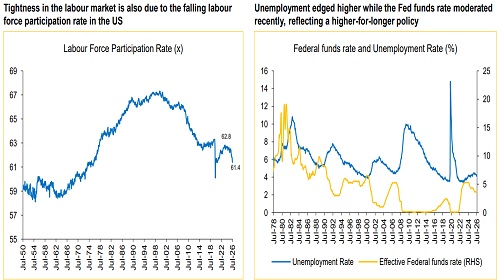
The FOMC voted 12-0 to raise the funds rate by 25bps to a 3.75-4.00% target range, its first hike since July 2023. The Fed is hiking into an inflation impulse it would normally look through. The proximate driver is a supply shock, energy costs pushed higher by West Asia conflict, layered on lingering tariff effects. Central banks are trained to see past relative price shocks and target underlying demand pressure. The Committee has chosen not to this time. That choice is the real story, and the rationale is defensive rather than confident: policymakers are haunted by the "transitory" misjudgement of 2021-22, when a supposed supply shock became entrenched 40-year-high inflation. Warsh's Fed is pre-committing to credibility insurance, accepting the risk of over-tightening into a supply shock to avoid the far higher reputational and economic cost of being late twice. The critical tension: hiking rates does nothing to lower the price of oil. It targets the second-round risk that a durable energy shock lifts inflation expectations and bleeds into wages and core prices. The Committee is effectively betting that anchoring expectations now is worth the growth it may cost later.
Reading the dot plot: hawkish, but with a soft core
The dots point in one direction, but the conviction behind them is uneven, which matters more than the median
* Of the 18 participants, 16 submitted dots. All 16 see at least one more hike this year. Four of those pencil in two more. Only two expect the Committee to stop after this single move.
* The near-term signal is unambiguous: the bias is to keep going in 2026.
* But 2027 is where the facade cracks. Eight officials see another hike, six see a hold, four see cuts.
* Beyond that, the dots show no further increases, with one cut penciled in for 2028 and at least one for 2029. So the market is being shown a short, sharp, shallow cycle, not a prolonged tightening regime.
The honest interpretation is a Fed confident about the immediate move and genuinely split on everything after it. When a median rests on a handful of swing dots, it conveys less conviction than the headline implies.
Global yields are the transmission belt
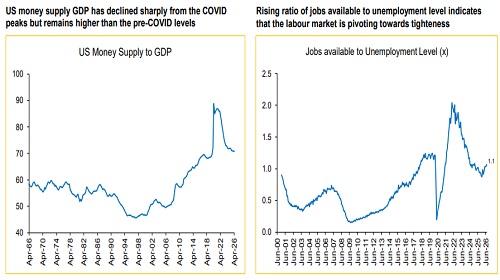
Markets front-ran this. Treasury yields have been surging, with the 10-year US Treasury yield moving beyond 5%, with the rate-sensitive 2-year moving even harder. Japan’s 10 year Treasury yield has also breached the 3% level. The mechanism to watch: rising energy costs lift headline inflation, central banks respond with tighter policy, and term premia rise as investors demand more compensation for inflation risk. That is a self-reinforcing loop pushing global yields structurally higher, and it tightens financial conditions everywhere regardless of local fundamentals.
For Detailed Report With Disclaimer Visit. https://choicebroking.in/disclaimer
SEBI Registration no.: INZ 000160131