Exploring Madhubani Art Tourism: A Colorful Journey Through Mithila Culture
Madhubani Art Tourism: Exploring the Living Heritage of Mithila
Introduction
Madhubani Art Tourism offers travelers an opportunity to experience one of India's most distinctive traditional art forms while discovering the cultural heritage of the Mithila region in Bihar. Also known as Mithila painting, Madhubani painting is recognized for its bold colors, intricate patterns, geometric designs and themes drawn from mythology, nature, social life and everyday traditions.
For visitors, Madhubani is more than an art style to admire in a gallery. It can be experienced through village visits, artisan interactions, craft demonstrations, cultural workshops, local shopping and exploration of the region's traditions.
What Is Madhubani Art?
Madhubani painting originated in the Mithila region and has traditionally been associated with communities in Bihar and neighboring parts of Nepal. Historically, paintings were created on freshly plastered mud walls and floors, particularly during weddings, festivals and other important occasions. Over time, the art expanded to handmade paper, cloth and canvas.
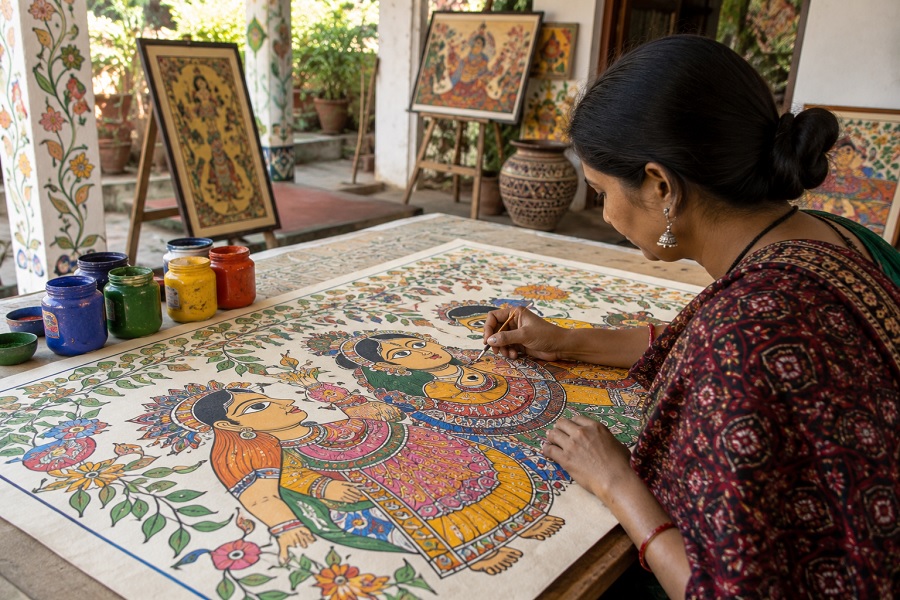
The paintings commonly feature Hindu deities, animals, birds, plants, celestial symbols, wedding scenes and aspects of social life. Artists often use intricate borders and patterns to fill the composition, creating a distinctive visual identity.
Why Madhubani Art Is Important for Cultural Tourism
Madhubani art connects visitors with the living traditions of Mithila. Rather than simply viewing finished artwork, tourists can learn how artistic knowledge has been transmitted across generations.
The art also has an important economic role. Bihar Tourism states that Madhubani painting provides livelihood support to approximately 20,000 to 25,000 artisan families in Madhubani district and elsewhere in Bihar.
This makes responsible art tourism particularly valuable because spending on workshops, locally made artwork and community experiences can help support artisans and preserve traditional skills.
Madhubani Painting and GI Recognition
Madhubani Paintings received Geographical Indication recognition in 2007. The official Geographical Indications database lists Madhubani Paintings as a registered handicraft associated with Bihar.
The GI status highlights the geographical and cultural connection between the craft and its traditional region. For tourists purchasing artwork, understanding this heritage can make the experience more meaningful.
Major Themes in Madhubani Paintings
Madhubani paintings are known for their rich storytelling. Popular themes include:
Hindu gods and goddesses
Ramayana-related themes
Krishna and Radha
Shiva and Parvati
Durga and Lakshmi
Sun and Moon
Wedding ceremonies
Village life
Birds and animals
Trees and flowers
Social events
Geometric patterns
Mythological stories
Nature-inspired compositions
These themes allow travelers to understand aspects of Mithila's religious beliefs, customs, environment and social traditions through visual storytelling.
Traditional Materials and Techniques
Traditional Madhubani painting made extensive use of locally available materials and natural pigments. Rice powder, plant extracts, charcoal and other natural materials have historically been used in the process. Artists traditionally worked with fingers, twigs and simple handmade tools, while contemporary artists may also use brushes and pens.
The use of flat colors, detailed line work and densely patterned compositions gives Madhubani art its recognizable appearance.
Cultural Experiences for Tourists
Madhubani Art Tourism can be developed around hands-on experiences rather than conventional sightseeing alone.
1. Village Art Tours
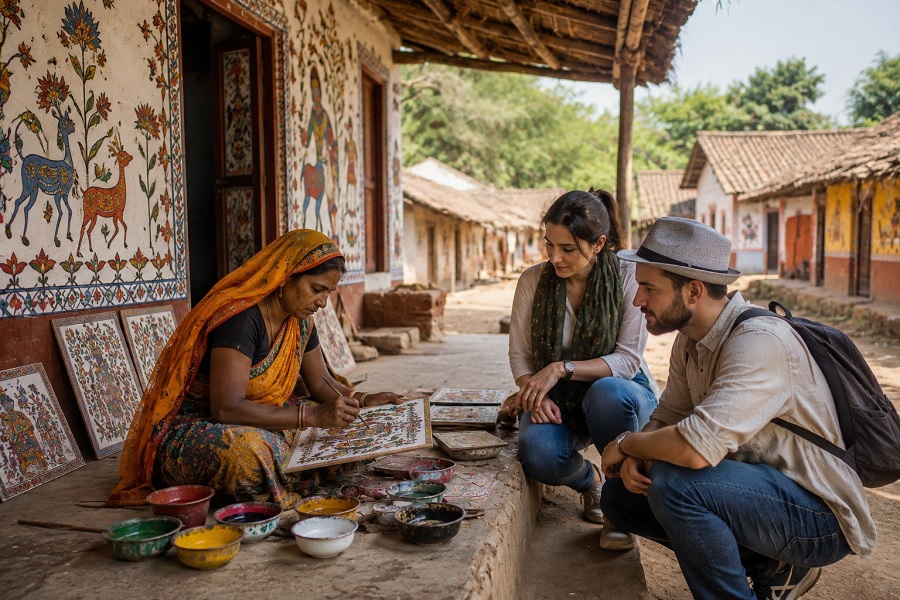
Travelers can explore villages associated with Mithila's artistic traditions and observe how local artists work.
2. Live Painting Demonstrations
Watching an artist create a painting from the initial outline to the final details provides visitors with a deeper appreciation of the skill involved.
3. Madhubani Painting Workshops
Short workshops can allow tourists to try basic techniques under the guidance of local artists.
4. Artisan Interaction
Conversations with artists can introduce visitors to the history, symbolism and cultural meaning behind different motifs.
5. Traditional Art Shopping
Visitors can purchase paintings and craft products directly from artisans or established craft outlets, helping connect tourism spending with local creative communities.
6. Cultural Photography
The colorful artwork, village settings, craft demonstrations and traditional surroundings provide opportunities for responsible cultural photography.
Exploring Madhubani and Mithila Culture
Madhubani district is closely associated with Mithila culture and its traditional art. The district administration describes Madhubani as a center of Maithili culture and highlights its villages and ancient painting traditions as attractions for visitors.
Travelers interested in Madhubani art can therefore combine art experiences with visits to temples, local markets, cultural sites and regional food experiences.
Kapileshwar Temple in the Rahika area is among the cultural attractions mentioned by the district administration. A major fair is held there during Maha Shivaratri, creating an opportunity to combine religious and cultural tourism with a wider exploration of the district.
Madhubani Art and Women Artisans
Women have historically played a central role in preserving and developing Madhubani painting. The district administration notes that the tradition was traditionally created by women from different communities in the Mithila region, although the art is now practiced by men as well.
This history makes women-led craft experiences an important part of cultural tourism. Visitors can learn not only about painting techniques but also about how traditional artistic knowledge has contributed to household livelihoods and cultural continuity.
Best Cultural Tourism Activities
A Madhubani-focused cultural itinerary could include:
Visiting local artisans
Watching live painting demonstrations
Joining a beginner painting workshop
Exploring traditional markets
Buying authentic local artwork
Learning about Mithila motifs
Photographing traditional art with permission
Visiting nearby heritage and religious sites
Sampling regional Mithila cuisine
Exploring local festivals
Learning about Maithili culture
Visiting museums or craft centers where available
Responsible Madhubani Art Tourism
Responsible tourism is essential when visiting traditional artisan communities. Travelers should respect local customs, ask permission before photographing people or private homes, and avoid treating cultural traditions simply as photo opportunities.
Buying directly from recognized artisans or reliable craft channels can also help support the people who preserve the tradition.
Tourists should be careful about making assumptions regarding authenticity or traditional techniques. Madhubani art is practiced in contemporary forms today, and artists may use both traditional and modern materials.
Madhubani Art as a Sustainable Tourism Opportunity
Cultural tourism can create opportunities beyond conventional sightseeing. Craft workshops, village experiences, local guides, homestays, transportation, food services and artisan sales can all become part of a local tourism economy.
Bihar Tourism currently promotes art and craft experiences as part of the state's broader tourism offering, while its tourism programs also include initiatives such as a 2026 homestay promotion scheme.
A well-managed Madhubani tourism model can therefore connect heritage conservation with local entrepreneurship.
Shopping for Madhubani Paintings
Madhubani paintings are available on handmade paper, cloth and canvas, among other surfaces. Bihar's official tourism information also highlights Madhubani paintings among the state's traditional products for visitors to purchase.
When purchasing artwork, travelers can ask about:
Artist or artisan details
Place of origin
Materials used
Painting technique
Size and medium
Whether the work is handmade
Whether the seller provides authenticity or artisan information
Choosing genuine handmade products rather than mass-produced imitations can provide greater support to the craft community.
The Future of Madhubani Art Tourism
The future of Madhubani Art Tourism lies in combining heritage preservation with modern visitor experiences. Digital storytelling, online exhibitions, artisan workshops, cultural festivals, photography tours and educational programs can introduce younger travelers and international visitors to Mithila's artistic traditions.
At the same time, tourism development should keep local artists and communities at the center of the experience. The goal should not simply be to increase visitor numbers, but to create meaningful cultural encounters while protecting traditional knowledge.
Conclusion
Madhubani Art Tourism provides a colorful and immersive way to discover the cultural identity of Mithila. From intricate paintings and traditional motifs to village craftsmanship and local storytelling, the experience allows travelers to see how art can remain connected to everyday life.
For visitors to Bihar, exploring Madhubani art can become much more than buying a souvenir. It can be an opportunity to meet artisans, understand centuries-old creative traditions, experience regional culture and contribute to the preservation of a living heritage.
With responsible tourism, community participation and greater awareness of authentic craftsmanship, Madhubani Art Tourism can continue to grow as an important cultural tourism experience in India.