Defrail Technologies coming with IPO to raise Rs 14 crore

Defrail Technologies
- Defrail Technologies is coming out with an initial public offering (IPO) of 18,60,800 shares in a price band of Rs 70-74 per equity share.
- The issue will open on January 09, 2026 and will close on January 13, 2026.
- The shares will be listed on SME Platform of BSE.
- The face value of the share is Rs 10 and is priced 7.00 of its face value on the lower side and 7.40 times on the higher side.
- Book running lead manager to the issue is Nexgen Financial Solutions.
- Compliance Officer for the issue is Vaibhav Sharma.
Profile of the company
Defrail Technologies is engaged in the business of manufacturing rubber parts & components including Rubber Hose and Assemblies, Rubber Profiles and Beadings and Rubber Moulding parts. Its Products have diverse application across different industries including Automotive, Railways and Defence. It assists clients in selecting the right type of product for their applications while also providing design and customization options according to the intended use.
The company operates with two manufacturing plants located at Neemka, Tigaon Road, Ballabgarh, Faridabad, Haryana and Plot No 180 Sector 24 Faridabad, Haryana, spanning a total area of 2420 sq. yards and 4833.33 sq. yards respectively. It is Capable of producing Variety of rubber products available in different size and specification as per the requirement of customer including but not limited to Diesel and petroleum Hose Pipe, LPG Hose pipe, Nylon Tubes, Rubber Gaskets, Rubber Grommets, Air intake Hose, Aluminium Window Rubber beading, Black EPDM Rubber Profiles, Rubber Sponges Profiles and many more.
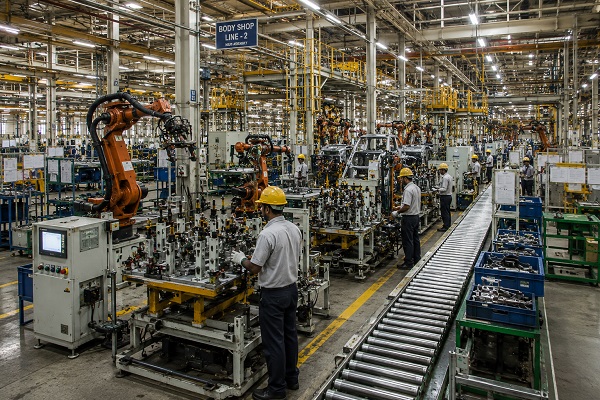
The company’s products are manufactured from various raw material which includes Acrylonitrile Butadiene Rubber, Chloroprene Rubber, Ethylene Propylene Diene Rubber Monomer, Acrylonitrile Butadiene Rubber, Chloro Sulphonated Pole and Chlorinated Polyethylene. Following production, its products undergo through examination, testing and evaluation to ensure compliance with client’s specifications and industry standards. Its manufacturing unit is equipped with advanced machineries, such as high Cold Feed Extruders, Knitting Machines, Autoclaves / Vulcanizers, Braiding Machines etc.
Proceed is being used for:
- Capital expenditure
- General corporate purposes
Industry Overview
Indian rubber sector is a vital part of the national economy, serving as a key raw material supplier for numerous industries, most notably the automotive sector. The industry manufactures a vast array of products, including automotive parts, tyres, footwear, and industrial goods, supporting sectors like the auto and healthcare industries and contributing to rural employment. Cultivation is primarily concentrated in traditional states like Kerala and Tamil Nadu, but is expanding in the non-traditional Northeast region, driven by favorable growth policies and industry structure. Through a strong export market for raw materials and finished products, the Indian rubber industry generates substantial export revenue, boosting the nation's foreign exchange reserves. There is a growing trend towards the development of eco-friendly rubber products, influenced by consumer awareness and government policies promoting sustainable practices. The sector is experiencing robust growth, driven by domestic and international demand, particularly from the automotive industry, and is a major employer with a wide range of products from tires to industrial goods. Despite consistent growth, the sector faces challenges such as a domestic consumption deficit, leading to import reliance, and raw material price volatility.
Rubber consumption serves as a direct indicator of the extent of rubber-based industrialization. Although India is the world’s second-largest consumer of natural rubber, its per capita rubber consumption is only about 1.2 kg, significantly lower than China’s 6.5 kg and the global average of 3.6 kg. Rubber end-products span over 50,000 items, catering to diverse industries such as transport, healthcare, households, sports, and entertainment. Promoting rubber consumption is essential for the holistic development of the rubber industry value chain. India’s synthetic rubber (SR) production continues to demonstrate steady growth, reaching 579,857 tonnes in 2024-25, up from 546,565 tonnes in 2023-24, a year-on-year increase of 6.1%. While this marks a slower pace than the 16.9% growth observed the previous year, it still indicates a healthy expansion of domestic SR manufacturing capabilities. In terms of composition, styrene butadiene rubber (SBR) accounted for 53.1% and polybutadiene rubber (PBR) for 22.8% of total SR production during 2024-25. These figures represent a slight shift from 2023-24, where SBR and PBR held shares of 54.7% and 24.5% respectively, suggesting a gradual diversification within synthetic rubber variants.
Indian rubber sector is poised for significant growth in the coming years, driven by increasing domestic consumption from booming automotive, construction, and healthcare industries, government initiatives like the FAME scheme, and expanding natural rubber cultivation in the Northeast and other regions. Indian rubber market is projected to experience a Compound Annual Growth Rate (CAGR) of approximately 3.9% between 2025 and 2033, growing from a 2024 market size of roughly $3.85 million to an estimated $5.53 million by 2033. The Rubber Board and the ATMA are implementing projects like INROAD to boost cultivation in Northeast India, while also focusing on improving productivity and quality for growers. The push for domestic self-reliance, alongside increased demand from sectors like the automotive industry, creates a promising outlook for the Indian natural rubber market despite existing consumption-production gaps. India is also advancing its rubber industry through innovative initiatives like the iSNR, INR Konnect, and mRube platforms, aligned with the National Rubber Policy 2019. These efforts aim to increase domestic production, enhance sustainability, and ensure global competitiveness while tackling challenges like compliance with EUDR and expanding market access.
Pros and strengths
RDSO approved vendor status: The company has been granted approval by the Research Designs & Standards Organization (RDSO) approved vendor, effective July 8, 2024, for the manufacturing and supply of Air Brake Hose Coupling, Brake Pipe, and Feed Pipe. This approval allows it to participate in the supply chain of Indian Railways, providing access to a large and structured market. It also enhances its credibility as a qualified supplier, strengthens its position in competitive tenders, and facilitates opportunities for technical collaboration. Additionally, compliance with RDSO standards underscores its commitment to manufacturing products that contribute to the safety and reliability of railway operations.
Diversified product range: The company manufactures a wide range of rubber components used across the Automobile, Railways, and Defence sectors. The product portfolio comprises items such as hoses, seals, gaskets, bellows and molding components. This diversification across multiple sectors enables it to generate revenue from multiple sectors, reducing reliance and dependency on any single industry and limiting exposure to sector-specific risks.
In-house testing and R&D centre: The company operates an equipped Testing Laboratory and Research & Development (R&D) Centre that supports the design, development, and testing of its products. This infrastructure enables it to conduct product testing to verify that manufactured products are in line with customer specifications and requirements. The R&D Centre focuses on continuous product improvement, allowing it to develop new products and refine existing products in response to evolving market needs and technological advancements. This approach to R&D and testing helps the company in assessing their products' performance and durability under real-world conditions.
Risks and concerns
Limited supplier base may impact operational continuity: The company’s top 10 suppliers contribute a significant portion of its raw material. The company has procured 81.56%, 85.45%, 88.68% and 94.74% of its raw material supply from top 10 suppliers in FY25, FY24, FY24 (Sole Proprietorship) and FY23 (Sole Proprietorship). Though it has not faced any difficulties in procuring the raw material in the last three preceding financial years and there were no past instances where it has experienced any losses due to loss of any vendor/ supplier. However, it cannot assure that it will not face any such situations in the future, or the procurement of raw material will be on commercially viable terms. Furthermore, any dispute with any of the suppliers may damage its relationship with existing and potential suppliers, and in any such event its operations will be adversely affected. Further it will also affect its profitability and reputation in the market.
Loss of any key customer could materially adversely affect the business: The company is dependent on a limited number of customers for a significant portion of its revenues. The company has garnered 98.73%, 98.80% and 99.75% of its total revenue from top 10 customers in FY25, FY24 (Sole Proprietorship) and FY23 (Sole Proprietorship). The company’s business is substantially dependent on a limited number of clients for a significant portion of its revenue. Such reliance on a concentrated client base increases the volatility of its financial results and exposes it to risks associated with individual contracts. Any inability to achieve expected profitability, or losses incurred on these large contracts, could adversely affect its business, financial condition, and results of operations. Furthermore, the loss of a key client, or failure to comply with the terms of a purchase order, may result in a reduction of future business from such clients, which could materially impact its revenue and overall performance.
Revenue concentration in Haryana increases regional risk exposure: The company operates its business operations from its registered office and manufacturing facility. Although, its business operations span various regions across India, State of Haryana contributes to a substantial portion of its revenues. The company has garnered 90.22%, 100%, 85.78% and 91.02% of its revenue from State of Haryana in FY25, FY24, FY24 (Sole Proprietorship) and FY23 (Sole Proprietorship). Any factors relating to political and geographical changes, growing competition, economic downturn, natural disasters and any change in demand may adversely affect its business. It cannot assure that it shall generate the same quantum of business, or any business at all, from this state, and loss of business from this state could adversely affect its revenues and profitability.
Outlook
Defrail Technologies is engaged in the business of manufacturing rubber parts and components, including rubber hoses and assemblies, rubber profiles and beadings, and moulded rubber parts. Its products find applications across industries such as automotive, railways, and defence, with the company offering clients both standard products and customised solutions tailored to their operational requirements. The company is an RDSO-approved vendor, enabling it to supply products to the Indian Railways sector. The company has an in-house testing and research and development center, supporting product quality and innovation. On the concern side, the company is dependent on a limited number of customers for a significant portion of its revenues. The loss of a major customer or significant reduction in demand from any of its major customers may adversely affect its business, financial condition, results of operations and prospects. Moreover, its top 10 suppliers contribute a significant portion of its raw material. Any dispute with one or more of them may adversely affect its business operations.
The company is coming out with a maiden IPO of 18,60,800 equity shares of face value of Rs 10 each. The issue has been offered in a price band of Rs 70-74 per equity share. The aggregate size of the offer is around Rs 13.03 crore to Rs 13.77 crore based on lower and upper price band respectively. On performance front, the company’s total revenue from operations for the financial year 2024-2025 stood at Rs 6,176.78 lakh whereas for the financial year 2023-24, it stood at Rs 2,929.73 lakh representing an increase of 110.83%. Moreover, the restated profit after tax for the financial year 2024-2025 stood at Rs 351.93 lakh whereas for the financial year 2023-24, it stood at Rs 132.70 lakh representing an increase of 165.20%.
In a bid to enhance operational efficiency, the company is adopting advanced technologies and improve existing manufacturing processes. This will streamline production, reduce costs, and enhance product quality. Concurrently, it will focus on expanding its customer base by targeting new clients within India. Developing innovative products for emerging automotive applications will be a key strategy in attracting and retaining new customers, thereby driving business growth and diversification. Going forward, the company plans to continue expanding its manufacturing capabilities in order to capture future growth trends. It intends to explore opportunities to expand its operations by offering new products within its existing lines of business. Further expanding its product offerings will help it to build on existing diversification of its business.