China's Manufacturing Dominance Offers India an Oppoartunity, but Execution Will Determine the Outcome: Vallum Capital
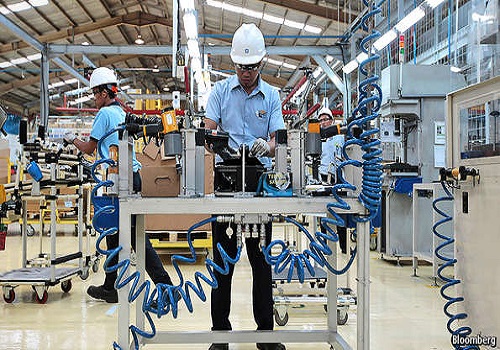
Acconting to Vallum Capital Advisors, a SEB-registered Portfoilo Manager, India's manufacturing growth opportunity lies not merely by attracting factories, but in developing the supporting ecosystem, infrastructure and execution capabilities required to compete globally
Vallum Capital has released its latest investment commentary, From Mumbai to China's Innovation Belt, examining China's inclushtal transformation, India's manufacturing opportunity and the contrasting evolution of capital markets in the two economies.
Drawing on a 12-day visit across five Chinese cities and interactions with 15+ companies, the mport explores a central question. Will manufacturing leave China, and can india emerge as the principal beneficiary of the China + 1 strategy?
The report finds that China's competitive advantage is no longer simply cost arbitrage. It is an interlocking industrial ecosystem in which suppliers, technologies, manufacturing capabilities and markets reinforce one another. Across electric vehicles, batteries, solar, semiconductors and artificial intelligence, China has systematically built capabilities across the value chain, supported by patient capital, infrastructure and long-term industrial planning
While global manufacturers are diversifying supply chains towards countries such as india Vietnam and Mexico, relocating manufacturing from China is not straightforward. China's scale, integrated supply chains and technological depth remain formidable advantages.
Manish Bhandari, Managing Director and Portfolio Manager, Vallum Capital Advisors, said, "China's experience demonstrates that execution eats strategy for lunch. India has a significant opportunity to benefit from the China + 1 shift, but manufacturing leadership cannot be built an cost advantages alone, it requires an integrated ecosystem of suppliers, infrastructure, technology and patient capital. The real question for investors is whether India con translate its demographic advantage and growing financial participation inta sustainable productivity, innovation and shareholder returns."
India's Outlook: From Expatosialisation to Manufacturing
The report highlights a striking divergence between the two economies over the past 25 years. China's revolution was physical, chaupelion household savings through its banking system into roads, factories and manufacturing capacity, india's revolution was financial, bringing millions of households into capital markets through digital infrastructure and discount broking.
India's dog accounts have increased almost nine-fold, from 2.7 crore in 2016 to 23.5 crove in 2026, supported by Aadhaar-based e-KYC, UP and the expansion of discount brokers.
China ended 2025 with approximately 25 crore stock investors, placing the two investor bases at a similar order of magnitude, although India's figure represents accounts rather than unique investors
This expansion reflects a structural shift in indian household participation in financial assets However, the report argues that india continues to direct a substantial proportion of its savings towards physical assets, particularly housing, while its manufacturing ecosystem remains less developed than China's
Stock Markets: Growth is Not the Same as Returns
For equity Investors, the report draws an important distinction between building industries and creating shareholder value. China's largest listed companies have priontised capacity, research and development, and market shars, often at the expense of profitability. Vallum's analysis of the 500 largest Chinese listed companies by market capitalisation shows EBITDA margins of 10-14%, but net profit margins of only 1-2% across the market-capitalisation cohorts examined
The report cautions that industrial dominance does not automatically translate into attractive investment returns. Inwestors must distinguish between companies that gain marlket share and those that generate sustainable profits and retums on capital
The China + Opportunity
India's opportunity is meaningful, but not inevitable. China's experience underlines the importance of execution, infrastructure, technological development and long-term capital allocation. The challenge for india is to move beyond attracting incremental manufacturing and bulld globally competitive industrial ecosystems.
Vallum Capital Advisors believes the critical investment question is not simply where manufacturing relocates, but which businesses can convert structural opportunities into durable earnings and shareholder returns
Above views are of the author and not of the website kindly read disclaimer