6G could add $1.24 trillion to global economy by 2040: Industry
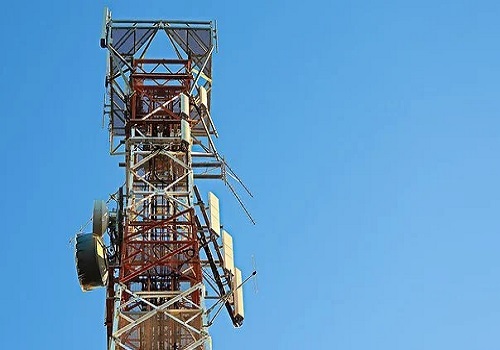
Sixth-generation mobile technology or 6G could generate an additional $1.24 trillion for the global economy by 2040, but inadequate spectrum allocation could put nearly half of that potential at risk, a report by an industry body showed on Thursday.
According to a report by the GSMA estimates that next-generation mobile networks could contribute the equivalent of 0.7 per cent of global GDP by 2040 through advancements in artificial intelligence, industrial automation, immersive digital services and next-generation connectivity.
However, the mobile industry body warned that as much as $520 billion or 42 per cent of the projected economic value, could be lost if governments fail to make sufficient spectrum available to support large-scale 6G deployment.
“Decisions on spectrum policy taken over the next few years would play a critical role in determining how much of that value can ultimately be realised,” said GSMA Chief Regulatory Officer John Giusti.
In addition, manufacturing and financial services are likely to be the biggest beneficiaries of 6G, accounting for 20 per cent and 19 per cent of its projected economic contribution, respectively, according to the industry body.
Construction is expected to contribute 13 per cent, while the information and communications technology sector is projected to account for 12 per cent.
The report comes ahead of key international spectrum discussions scheduled for the World Radiocommunication Conference in 2027 where policymakers are expected to determine future spectrum allocations for emerging technologies.
“6G is expected to differ significantly from previous mobile generations by being designed around artificial intelligence capabilities, enabling networks to support intelligent decision-making, integrated sensing functions and seamless connectivity across terrestrial and satellite networks,” according to the industry association.
The report also identified that AI-driven connectivity, industrial robotics, advanced broadband services, integrated sensing technologies and non-terrestrial networks as key drivers of future economic gains.
It highlighted the importance of mid-band spectrum which is expected to account for about 70 per cent of 6G's economic contribution.
Low-band spectrum is projected to contribute a further 25 per cent by extending coverage to rural areas, indoor locations and underserved regions.
To unlock the full benefits of 6G, the GSMA called on governments to release at least 2 GHz of mid-band spectrum by around 2030, including portions of the upper 6 GHz range, while also making the 600 MHz band available to improve coverage and support connected devices.
The industry also urged regulators to establish clear national spectrum roadmaps to provide investment certainty for operators planning future network rollouts.










Tag News
Inter-Ministerial Group recommends asset monetisation proposals worth over Rs 1,100 crore



More News

CareEdge Ratings expects FY27 fiscal deficit to exceed the budgeted amount by Rs 0.7-0.8 tri...