Travel Identity Blockchain Systems: The Future of Secure Global Tourism
The global travel industry is entering a new digital era, and one of the most revolutionary innovations shaping the future of tourism is blockchain-based travel identity systems. As travelers increasingly demand faster, safer, and more seamless experiences, blockchain technology is emerging as a powerful solution for digital identity verification across airports, hotels, border checkpoints, and travel platforms.
Traditional travel identity systems rely heavily on centralized databases, physical documents, and repetitive verification procedures. These methods often create long waiting times, security risks, data breaches, and identity fraud concerns. Blockchain technology offers a decentralized and highly secure alternative that can transform how travelers prove and manage their identities worldwide.
A blockchain travel identity system stores personal verification details in encrypted digital blocks that cannot be altered or tampered with easily. Instead of repeatedly sharing passports, visas, or personal information with multiple agencies, travelers can use a secure digital identity wallet linked to blockchain networks. This allows instant verification while giving users more control over their personal data.
One of the biggest advantages of blockchain-based travel identity systems is enhanced security. Since blockchain records are decentralized and encrypted, hackers find it much harder to manipulate or steal sensitive travel information. This could significantly reduce cases of identity theft, fake passports, and travel-related cyber fraud.
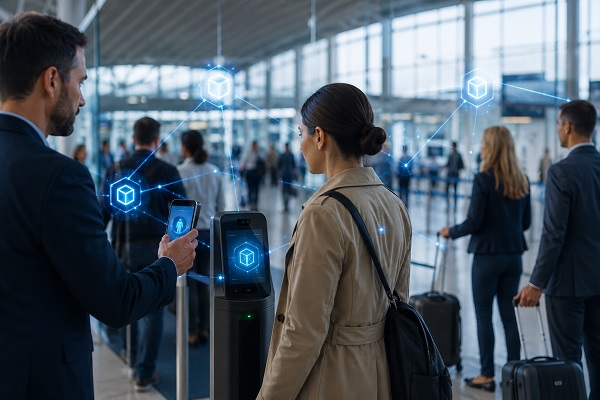
Airports and airlines are among the first sectors actively exploring blockchain identity technology. Future smart airports may allow passengers to move through security checkpoints, immigration, and boarding gates using facial recognition combined with blockchain verification. This could drastically reduce waiting times and create smoother travel experiences for millions of passengers.
Hotels and hospitality companies can also benefit from blockchain identities. Travelers may soon check into hotels without presenting physical documents at reception desks. Instead, secure blockchain credentials could instantly verify identity, payment details, and booking confirmations through mobile devices.
Another major benefit is privacy protection. Current travel systems often require travelers to share the same information repeatedly with multiple organizations. Blockchain allows selective data sharing, meaning users can choose exactly what information they want to provide without exposing unnecessary personal details.
Governments around the world are also studying blockchain-powered digital passports and border management systems. These systems could improve immigration efficiency while strengthening national security. In the future, international travel may involve fully digital passports stored securely on smartphones or biometric devices.
Blockchain identity systems can also support travel insurance, loyalty rewards, visa applications, and international payments. A unified digital identity ecosystem could simplify every stage of the travel journey, from booking flights to crossing borders and accessing travel services abroad.
Despite its huge potential, blockchain travel identity technology still faces several challenges. Governments, airlines, airports, and international organizations must work together to create global standards and regulations. Privacy concerns, infrastructure costs, and technology adoption barriers must also be addressed before large-scale implementation becomes possible.
However, the momentum behind blockchain tourism innovation continues to grow rapidly. As digital transformation accelerates across the travel industry, blockchain identity systems are expected to play a major role in creating safer, smarter, and more efficient global tourism networks in the coming years.
The future traveler may no longer carry bulky document folders or face endless verification queues. Instead, secure blockchain identities could enable a seamless, touchless, and highly personalized travel experience across the world.