Spending on private education in South Korea jumps 60 pc over past decade
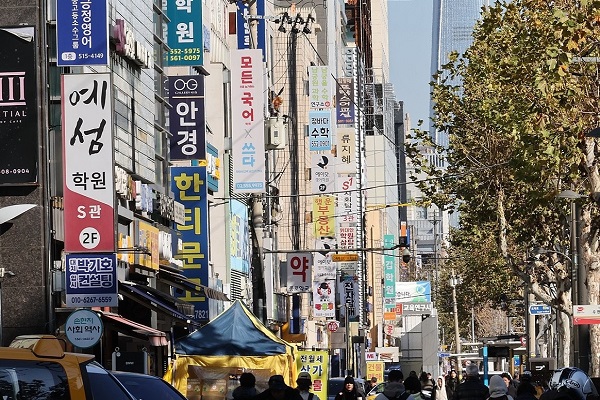
South Korean families' spending on private education for their children has jumped by more than 60 percent over the past decade, government data showed on Sunday.
According to the Korean Statistical Information Service (KOSIS) for the Ministry of Data and Statistics, South Korean households spent just under 29.2 trillion won (US$20.2 billion) on private education in 2024, up by 60.1 per cent from 2014.
This also marked a fourth consecutive year of increase in private education spending, reports Yonhap news agency.
While costs for sending students to hagwons, or private academic institutions, have been rising, families also have more money to spend on giving their children extra lessons outside their schools, contributing to the continued surge in private education spending, the ministry said.
A steady increase in the number of dual-income households has also led to more expenditures on private education, the ministry added, since those parents often send their children to after-school hagwons during their working hours rather than leaving them at home alone.
KOSIS numbers also showed spending on education for elementary school students has had the most significant jump, going from about 7.6 trillion won in 2014 to 13.2 trillion won in 2024, a 74.1 percent increase.
Over the same 10-year period, spending for middle school students rose by 40.7 percent to 7.8 trillion won, and that for high school students went up by 60.5 percent to reach 8.1 trillion won.
According to KOSIS, a family with at least two unmarried children spent an average of 611,000 won per month on their private education during the third quarter of 2025. The figure accounted for 12.6 percent of such families' entire monthly expenditures, only behind spending on food.
KOSIS began tracking private education spending in 2019, when it accounted for 11.5 percent of monthly household expenditures. It reached 12.8 percent by 2024.
For 2025, the figure was 13 percent for the first quarter and hit the record high of 13.5 percent in the second quarter.
Experts say frequent changes to college admission policies and resultant uncertainty are forcing parents to lean more heavily on private education.





.jpg)

.jpg)