


Over 96 pc of gas stations freeze fuel prices under price cap system: South Korea
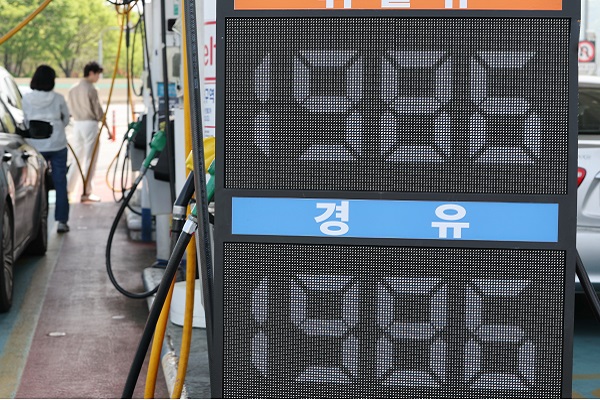
More than 96 per cent of gas stations nationwide have kept gasoline prices unchanged under the country's fuel price cap system, the industry ministry said on Thursday, noting South Korea is managing fuel prices within a relatively stable range compared with other major economies.
As of Wednesday, 96.1 percent of the country's 10,646 gas stations had maintained gasoline prices at the previous day's level, the Ministry of Trade, Industry and Energy said during a regular briefing on energy supply issues stemming from the Middle East crisis, reports Yonhap news agency.
Last week, the government froze fuel price caps for the third consecutive time, keeping the maximum prices of regular gasoline, diesel and kerosene supplied to gas stations by local oil refiners at 1,934 won (US$1.30), 1,923 won and 1,530 won per litre, respectively.
The ministry said active participation in the price ceiling system has helped stabilise domestic fuel prices, with gasoline prices rising only 19 percent and diesel prices 26 percent since the outbreak of the U.S.-Israeli war against Iran in late February.
By comparison, both gasoline and diesel prices jumped 44 percent over the same period in the United States. Gasoline prices in Britain, Germany and France rose between 19 percent and 22 percent, while diesel prices there increased between 28 percent and 37 percent, according to the ministry.
Japan, meanwhile, posted relatively smaller increases of 7 percent for gasoline and 9 percent for diesel thanks to its subsidy system, the ministry added.
Consumption of gasoline and diesel declined 3 percent and 8 percent, respectively, after the government introduced the price cap system March 13.
"Overall, consumers appear to be feeling pressure (over fuel consumption) due to higher prices," said Yang Ghi-wuk, deputy minister for trade, industry and resources security.
"Some may argue that fuel consumption would have contracted further if international oil prices had been fully reflected in domestic fuel prices," he added. "But we also need to consider the negative impact of weakened consumption, so there can be differing views on what constitutes an appropriate price level."
Regarding the timing for lifting the price ceiling, Yang said international oil prices should come under $100 per barrel with stabilisation of the situation in the Strait of Hormuz.
Brent crude price, an international oil benchmark, stood at $105.63 per barrel, and the West Texas Intermediate price was at $101.04 per barrel as of Wednesday.










.jpg)