NITI Aayog's new index to help foreign firms pick right state to invest in India
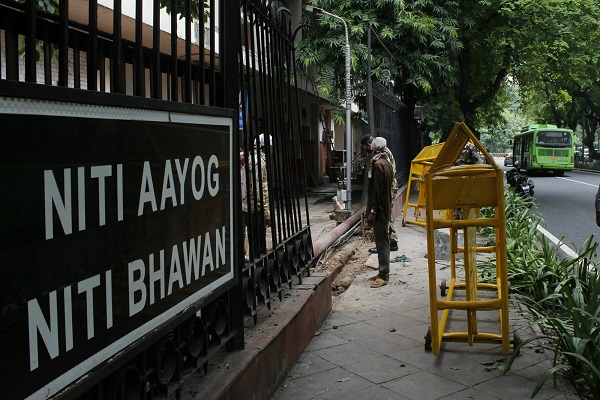
NITI Aayog’s new Investment Friendliness Index provides a comparison of India’s states and Union Territories in the quality of infrastructure, business climate, regulation, institutions and skills, which is expected to help foreign companies to choose a specific location where they can invest based on the available facilities, a report said.
An article in India Narrative, written from the perspective of Turkish companies, observes that investors do not have to enter an abstract "Indian market", but can choose a location where a particular business model can work.
"Turkiye–India trade reached US$6.88 billion in 2025–26, yet too much Turkish market-entry thinking still begins at country level: attend a national fair, appoint one distributor, open an office in Delhi or Mumbai and promise nationwide coverage. India is not one consumer base, regulatory environment or industrial geography. Turkish executives should recognise the error from Southeast Asia: no serious strategy treats ASEAN as a uniform market," it stated.
The article also highlighted that India has become more integrated. The Goods and Services Tax, national digital infrastructure and expanding transport corridors have reduced important frictions. Land allotment, electricity costs, construction permissions, incentives, industrial estates, and the practical speed of administration still vary by location. Choosing a state is therefore not a back-office compliance decision. It is part of product pricing, delivery time, and investment risk.
It points out that Gujarat is an attractive state for investment, because NITI Aayog links its leading position to efficient ports, competitive industrial power and strong road and rail networks. That combination can suit Turkish producers in machinery, chemicals, food processing, or components that need reliable utilities and export access.
In the case of Maharashtra, Mumbai offers finance, headquarters and professional services, while Pune anchors a major automotive and engineering ecosystem. Pune is seen as India’s largest automobile hub, with thousands of manufacturing and ancillary units in Pimpri-Chinchwad. A Turkish automotive supplier should therefore compare Pune, Chennai–Hosur, Gujarat’s auto belt and other relevant clusters according to its likely buyers, certification needs and after-sales obligations.
While considering Karnataka, Bengaluru offers software, cyber-security, industrial digitalisation and research-led companies access to talent, venture capital and corporate technology buyers.
But the same NITI Aayog assessment that praises Karnataka’s business climate also identifies regulatory ease and land allotment as weaknesses. While the state may be suitable for a software company, a manufacturing firm will have to look at the fact that land may not be easily available to set up a factory, the article added.