Jane Fraser: The Trailblazing CEO Transforming Citigroup and Redefining Wall Street Leadership
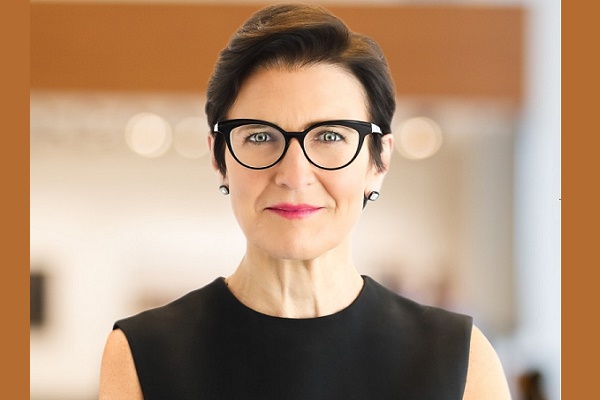
Jane Fraser stands as one of the most influential women in global finance — a leader who not only broke one of the highest glass ceilings on Wall Street, but also reshaped how a modern global bank should operate. As the first woman to serve as CEO of Citigroup, one of the world’s largest financial institutions, Fraser represents a powerful combination of strategic vision, disciplined execution, and human-centric leadership. Her journey from a young economics student in Scotland to a transformative CEO in the United States is a defining story of resilience, intellect, and groundbreaking achievement.
Early Life and Career Foundation
Born in St Andrews, Scotland, Jane Fraser pursued economics at Cambridge University before earning her MBA from Harvard Business School — a path that laid the foundation for her global perspective on finance. She began her career at Goldman Sachs and later worked at McKinsey & Company, where she became a partner and built a reputation for clear thinking, strong analytical skills, and an ability to solve complex business problems.
These early experiences shaped her future leadership style: bold when required, thoughtful in execution, and grounded in deep understanding of business fundamentals.
Rising Through the Ranks at Citigroup
Jane Fraser joined Citigroup in 2004 and rapidly moved through senior leadership roles. She led strategy during the global financial crisis, took charge of Citi Private Bank, oversaw U.S. consumer and commercial banking, headed CitiMortgage, and later became CEO of Latin America — one of Citi’s largest and most challenging markets.
Her ability to deliver results across different business units showcased her versatility. Whether handling wealthy private-banking clients, consumer credit, or massive emerging markets, Fraser built a reputation as a leader who listens, learns, and motivates teams to perform.
Breaking History: Becoming CEO of Citigroup
In 2021, Jane Fraser achieved a milestone that resonated around the world: she became the first woman to lead a major Wall Street bank. Her appointment was not only symbolic — it also reflected Citi’s confidence in her ability to steer the bank through a highly competitive, tech-driven era.
Taking charge of an institution with a global footprint in more than 100 countries, Fraser faced the enormous task of simplifying the bank’s structure, improving compliance, strengthening risk controls, and positioning Citi for long-term growth.
Transforming Citi for the Future
Fraser’s tenure as CEO has been defined by decisive transformation. One of her boldest moves was reshaping Citi’s global operations by exiting or restructuring several international consumer banking businesses. This allowed Citi to focus on stronger, more profitable segments such as:
Institutional banking
Wealth management
U.S. consumer banking
Cross-border corporate solutions
She introduced a leaner organizational structure, reducing layers of management to improve accountability and speed. Her strategy emphasizes technology modernization, digital banking, cybersecurity, and sustainable long-term growth.
For Fraser, transformation is not merely about cost-cutting — it’s about building a bank fit for the next decade.
Leadership Style: Empathetic, Strategic, and Mode
Jane Fraser is widely admired for her contemporary leadership approach. Unlike traditional command-and-control leaders often associated with Wall Street, she promotes:
Empathy and humanity in leadership
She advocates mental health awareness, work-life balance, and transparent communication within the workforce.
Hybrid work culture
Fraser notably supported flexible work arrangements even when other Wall Street banks demanded a full return to office. Her decision positioned Citi as a forward-thinking employer in a new era of work culture.
Diversity and inclusion
She consistently pushes for more women and underrepresented groups in top roles, signaling that leadership must reflect the diversity of Citi’s global client base.
Recognition and Global Influence
Jane Fraser is frequently listed among the world’s most powerful business leaders. Beyond personal achievement, she represents a new leadership archetype — one that blends financial rigor with emotional intelligence.
Her decisions influence global markets, international banking flows, and the strategic direction of one of the world’s most interconnected financial giants.
Why Jane Fraser’s Leadership Matters
A role model for women in business: Her rise demonstrates that gender barriers in top finance roles are not unbreakable.
Driving systemic banking reform: Fraser’s restructuring efforts are reshaping how global banks streamline operations.
Championing a modern workplace: From hybrid work to inclusion, she signals a more human-centered future of banking.
Global impact: As the head of a bank operating across continents, her policies influence economies, corporations, and millions of customers.
Conclusion
Jane Fraser’s story is more than a corporate success narrative — it is a powerful reminder that leadership can be both strong and compassionate, strategic and humane. As she continues to guide Citigroup through transformation, her impact resonates far beyond Wall Street. She stands today not only as a top businesswoman but as a global icon who is redefining what modern leadership looks like.