India`s debt-to-GDP ratio eases to 58.2% in FY26: Pankaj Chaudhary
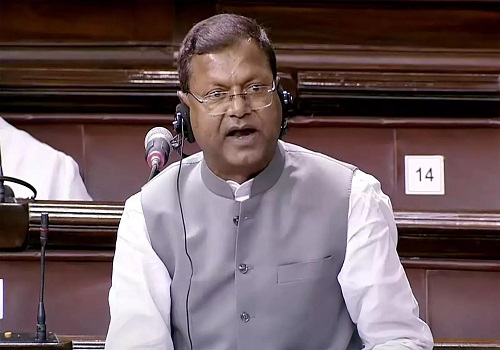
Minister of State for Finance Pankaj Chaudhary has said that India’s debt-to-GDP ratio has eased to 58.2 per cent (provisional) in FY26 as compared to 58.5 per cent in FY25, reflecting an improvement in the country's debt profile. As of March 31, 2026, the Centre's total debt stood at Rs 201.17 lakh crore (provisional).
He noted that the government's debt servicing burden has eased in the post-pandemic period, with the ratio of debt service (interest payment) to revenue receipts declining from 41.6 per cent in FY21 to 37.6 per cent (provisional) in FY26, indicating a stronger capacity to meet interest obligations through revenue receipts. He further highlighted that in BE 2026-27, the effective capital expenditure of Rs 17.15 lakh crore is higher than fresh debt receipts (fiscal deficit) of Rs 16.96 lakh crore of the government. This implies that borrowings are being fully deployed towards asset creation.
The minister said the central government's capital expenditure during FY21-FY26 stood at Rs 44.03 lakh crore. The increase in capital expenditure as a percentage of GDP has led to an increase in infrastructure development, including roads, railways, urban infrastructure, energy and digital connectivity. The increased capex has led to improved logistics efficiency, generated employment and crowded-in private investment. He added that the government continues to prioritise effective capital expenditure through budgetary allocation towards infrastructure and support states and UTs through the Scheme for Special Assistance to States for Capital Investment (SASCI) to incentivise capital expenditure.









.jpg)