India's Data Centre Capacity Could Reach Up to 7.5 GW by 2030, Positioning the Country as a Global AI Infrastructure Powerhouse: smallcase manager
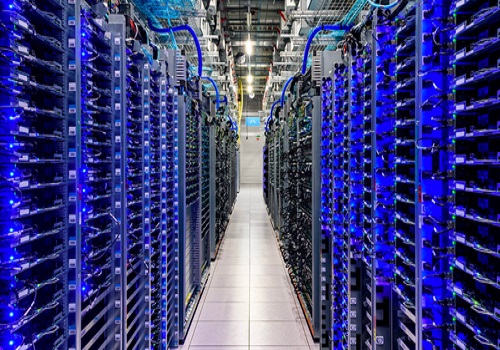
India's digital infrastructure sector is entering an unprecedented phase of expansion, with the country poised to become one of the world's leading destinations for AI-ready data centre infrastructure, according to a report by Naveen KR, smallcase manager and Senior Director, Windmill Capital. Backed by rapid artificial intelligence (AI) adoption, supportive government policies, accelerating digital public infrastructure, data localisation mandates and billions of dollars in planned investments, India is transitioning from being one of the world's largest digital consumers to becoming a global hub for digital infrastructure.
The report estimates that India's digital transformation market will reach USD 229.59 bn by 2029, growing at a CAGR of 20.63%–32.1%, as enterprises, governments and consumers continue to accelerate digital adoption. This transformation is fundamentally reshaping infrastructure demand, with AI workloads, cloud computing, enterprise digitisation and public digital platforms driving an unprecedented need for hyperscale data centres across the country.
According to the report, India's operational data centre capacity is expected to touch approximately 1.5 GW in early 2026, nearly three times the country's 2020 capacity (Source: MeitY). More recent estimates by Cushman & Wakefield suggest operational capacity has already crossed 1.6 GW, making India the second-largest operational data centre market in the Asia-Pacific region. By the end of 2026, operational capacity is projected to exceed 2 GW, supported by more than USD 30 billion in confirmed capital expenditure and an investment pipeline of nearly USD 60 billion concentrated across major Tier-I clusters. Looking further ahead, by 2030, India's operational data centre capacity is projected to expand to between 4.5 GW and 7 GW, with some industry forecasts suggesting capacity could approach 7.5 GW as AI and cloud investments accelerate, creating the infrastructure required to support high-density AI workloads and positioning India as a global AI infrastructure powerhouse.
The report highlights that the sector's long-term growth is underpinned by an even larger investment opportunity. The Ministry of Electronics and Information Technology projects total investments in India's data centre ecosystem to exceed USD 200 bn, with nearly USD 70 bn already under various stages of construction. By 2030, India is expected to capture a significant share of global data centre expansion, particularly for AI-focused compute infrastructure.
"The next decade will not be defined by who consumes the most data, but by who hosts, processes and powers the world's AI economy. India is uniquely positioned to lead this transition. With an investment pipeline exceeding USD 200 billion, supportive government policies, a strong engineering talent base and rapidly expanding digital public infrastructure, the country is building the foundation to become a global AI infrastructure hub. The focus now should be on scaling sustainably by strengthening power availability, fibre infrastructure, regulatory efficiency and high-density AI-ready facilities. If these priorities are addressed, India can emerge as one of the world's most preferred destinations for hyperscale and sovereign cloud investments said Mr. Naveen KR, smallcase manager and Senior Director, Windmill Capital
While Mumbai continues to remain India's largest and most strategic data centre market owing to its extensive submarine cable connectivity, the report notes that escalating construction costs—estimated at USD 6.64 per watt, among the highest in Asia—are encouraging operators to diversify into emerging locations. Hyderabad has emerged as one of the most attractive alternatives, benefiting from lower infrastructure costs, strong policy support, robust connectivity and geographic advantages. Situated on the Deccan Plateau, Hyderabad offers lower seismic risk, translating into reduced insurance costs while providing low-latency connectivity across India's major metropolitan centres, making it an ideal destination for both primary infrastructure and disaster recovery operations.
India's most significant competitive advantage, however, continues to be its talent ecosystem. The report notes that specialised engineering and digital infrastructure talent remains available at nearly one-fourth the cost of several developed markets, providing cloud operators and hyperscalers with substantial operational cost efficiencies while supporting large-scale expansion.
Artificial intelligence has emerged as the single largest driver of infrastructure demand. The report states that India currently ranks among the global leaders in AI adoption and accounted for 46.2% of all AI activity across the Asia-Pacific region. More than 82.3 billion AI transactions recorded during the second half of 2025 have significantly increased demand for GPU-intensive computing environments capable of supporting large-scale AI model training and inference.
The implementation of the Digital Personal Data Protection (DPDP) Act alongside sector-specific regulatory requirements from financial regulators is further accelerating demand for domestic data centre infrastructure. As enterprises increasingly store and process sensitive information within India, data localisation is expected to create sustained long-term demand for sovereign cloud infrastructure and hyperscale facilities.
India's globally recognised Digital Public Infrastructure (DPI) ecosystem has also become one of the country's strongest demand generators. Platforms such as Aadhaar, UPI, DigiLocker and the Government e-Marketplace continue to process massive transaction volumes daily. The report notes that DigiLocker now serves over 620 million users and hosts approximately 9.5 billion digital documents, while the Poshan Tracker supports facial verification for nearly 75 million beneficiaries using cloud-based AI capabilities. Similarly, the Government e-Marketplace processes nearly ?1,000 crore in daily gross merchandise value, requiring resilient, secure and ultra-low latency digital infrastructure.
As AI infrastructure evolves, the report emphasises that the industry's priorities are shifting beyond conventional power availability towards advanced thermal management. Traditional air-cooling technologies are increasingly inadequate for next-generation GPU clusters, making liquid cooling and immersion cooling essential for supporting high-performance AI compute environments. Simultaneously, India's relatively low fibre penetration—currently reaching only around 30% of telecom towers—could emerge as a strategic bottleneck unless fibre connectivity and network redundancy are expanded rapidly.
Sustainability is expected to become another defining pillar of future growth. Aligning with India's target of 500 GW of renewable energy capacity, the report calls for greater deployment of renewable energy procurement mechanisms, battery energy storage systems and Virtual Power Purchase Agreements (VPPAs) to ensure that the country's expanding digital infrastructure remains both reliable and environmentally sustainable.
Global technology companies including Microsoft, Amazon, Google and Meta continue to anchor India's hyperscale investment story, while domestic developers are expanding aggressively across multiple markets. Their investments are simultaneously catalysing a broader supplier ecosystem, creating opportunities for manufacturers of electrical systems, power infrastructure, cooling technologies and specialised engineering equipment, thereby strengthening India's broader digital manufacturing ecosystem.
Among Indian states, Telangana has emerged as a national leader in attracting digital infrastructure investments. Having secured over USD 20 billion in commitments and targeting 5 GW of capacity by 2030, the state has positioned Hyderabad as one of India's fastest-growing data centre markets while hosting nearly 20% of the country's Global Capability Centres (GCCs). The report attributes much of this success to Telangana's TS-iPASS framework, which enables self-certification, time-bound approvals and a fully digital clearance process that significantly reduces project implementation timelines. Complementing this ecosystem are initiatives such as TGDeX and the proposed Bharat Future City, which aim to accelerate AI innovation, quantum computing and next-generation digital infrastructure development.
Policy support from the Union Government is further strengthening India's investment appeal. The report notes that the Union Budget 2026–27 introduced a tax holiday extending until 2047 on global cloud revenues routed through Indian data centres, reinforcing India's ambition to become a preferred destination for sovereign cloud deployments. Recognition of data centres as infrastructure assets has also improved access to long-term institutional financing, providing greater certainty for large-scale investments.
Despite the strong outlook, the report identifies several challenges that require coordinated attention, including fragmented regulatory approvals across power, telecom and municipal agencies, shortages of specialised AI infrastructure and thermal engineering professionals, and the need for greater fibre route redundancy across emerging data centre markets. Addressing these challenges through policy harmonisation, industry-academia collaboration and accelerated infrastructure investment will be critical to sustaining India's growth trajectory.
The report projects that India's data centre ecosystem could generate nearly nine million jobs by 2030, spanning direct employment in engineering and facility management, indirect employment across manufacturing and supply chains, and broader economic activity across retail, logistics, hospitality and technology services. Beyond employment, data centres are expected to create a multiplier effect across sectors such as financial services, healthcare, advanced manufacturing and digital commerce by providing the high-performance computing infrastructure required to power India's next wave of innovation.
As global demand for AI computing infrastructure continues to accelerate, the report concludes that India's combination of policy support, cost competitiveness, engineering talent, renewable energy ambitions and rapidly expanding digital economy positions the country to become one of the world's most important destinations for hyperscale and AI-driven data centre investments over the remainder of the decade.
Above views are of the author and not of the website kindly read disclaimer