India`s central bank holds rates as trade deals ease pressure
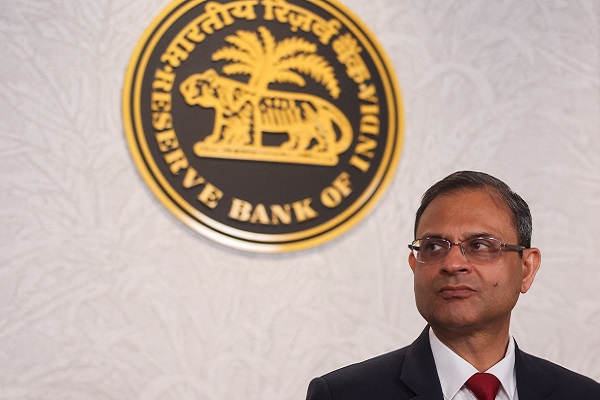
The Reserve Bank of India (RBI) kept its key repo rate unchanged on Friday, buoyed by a positive economic outlook and reduced pressures following trade deals with the U.S. and Europe.
The conclusion of a free trade pact with the EU and a tariff deal with Washington, likely to be finalised by March that includes a reduction in U.S. tariffs on Indian imports, will ease a key pressure point for India's economy and markets.
The RBI's six-member monetary policy committee voted unanimously to keep the repo rate at 5.25%, in line with the consensus view in a Reuters poll.
"The MPC noted that since the last policy meeting, external headwinds have intensified though the successful completion of trade deals augurs well for the economic outlook," Governor Sanjay Malhotra said in his policy statement.
The monetary policy stance was retained at "neutral", suggesting rates will stay low for some time to come.
The current policy rate is appropriate, Malhotra said, adding that inflation was benign and future rate moves would depend on the outlook for growth and inflation.
The central bank has now cut rates by a total of 125 basis points since February 2025, the most aggressive easing since 2019. It cut rates by 25 basis points at its last meeting in December.
India remains one of the world's fastest-growing major economies, bolstered by strong domestic demand, public infrastructure spending and a relatively resilient services sector.
The economy is expected to grow 7.4% in the current financial year and the government's economic adviser has forecast growth at 6.8%-7.2% next year.
While trade tensions with the U.S. have been a drag on the world's fifth-largest economy, the U.S. has agreed to cut tariffs on Indian imports from nearly 50% to 18% in exchange for India halting Russian oil purchases and lowering trade barriers.
Inflation in India has been low and expected to average close to 2% in the current financial year, below the central bank's target of 4%. In December, retail inflation stood at 1.33%, the highest in three months.
India's benchmark 10-year bond yield rose after the RBI did not announce any liquidity supporting measures. The rupee was 0.1% lower, while benchmark equity indexes recouped losses and were last trading little changed.
EASING CYCLE ON PAUSE
Economists expect the RBI to stay on hold in the near term, aligning with several Asian central banks, including South Korea and Indonesia, which have signalled pauses in their easing cycles amid inflation concerns and external pressures.
"We expect the central bank to remain on an extended pause amid a positive cyclical up-cycle and gains from the successful conclusion of U.S. trade negotiations." said Radhika Rao, senior economist at DBS Bank in Singapore.
GROWTH STRONG, STABLE INFLATION
The central bank did not provide a full-year GDP forecast for the next financial year as a new data series will be rolled out in February.
The central bank, however, expects growth in the April-June 2026 quarter at 6.9% and at 7% in the subsequent three months.
India's government has forecast growth in a range of 6.8%-7.2% for the financial year, supported by recent trade deals, robust agricultural output following 2025's abundant rains, and tax cuts aimed at boosting urban consumption.
The RBI raised its inflation projection for the current financial year to 2.1% from 2%.
In the first and second quarters of next year, inflation is forecast at 4% and 4.2%, respectively. A projection for the full financial year will be released in April, Malhotra said.
The rollout of a new retail inflation data series could recalibrate pricing dynamics but the governor flagged risks.
"Geopolitical uncertainty coupled with volatility in energy prices and adverse weather events pose upside risks to inflation," Malhotra said.
While holding rates, the RBI assured markets of its commitment to "proactive" liquidity management.
Large government borrowings and the central bank's forex market interventions have sapped rupee liquidity from the markets, pushing up bond yields.
"While uncertainty remains on the growth-inflation figures as we await the new series, the uptick in commodity prices and weaker currency may pose upside risks to inflation," said Upasna Bhardwaj, chief economist at Mumbai-based Kotak Mahindra Bank.
"We therefore see limited room for additional easing on the repo rate front, with RBI's focus expected to be on ensuring stability on the liquidity front in the year ahead," she said.