India partners as pilot country with ITU to bridge AI gap for Global South
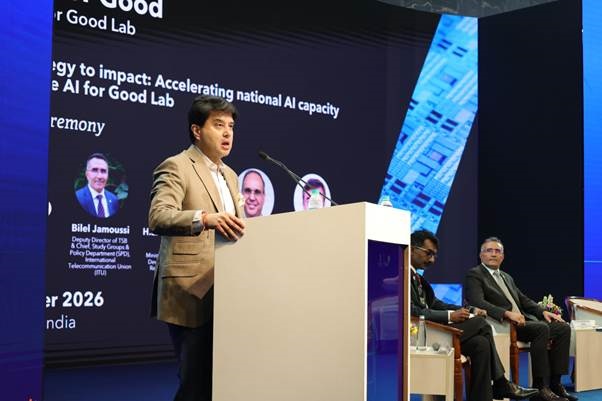
side partners from Africa, Asia, Latin America, and the Gulf, India brings its model of shared compute, open datasets, and Digital Public Infrastructure (DPI) to lead cross-regional learning and technical collaboration across the Global South.
The sessions at the workshop delivered structured deliberation on defining a concrete roadmap for institutional engagement, priority sector adoption, and Global South knowledge-sharing. Stakeholders achieved a shared understanding of the AI Sandbox requirements to support experimentation while validating fairness, robustness, and safety before scaling solutions to the last citizen.
Scindia reiterated India's guiding philosophy of "Sarvajan Hitaya, Sarvajan Sukhaya" (for the welfare of all, for the happiness of all), noting that while nearly 2.2 billion people worldwide remain offline, technology must expand human opportunity rather than concentrate it, ensuring the digital divide does not morph into an AI divide.
He detailed key milestones driving India's domestic AI capabilities and digital infrastructure under the Rs 10,000-crore-plus IndiaAI Mission. On the compute infrastructure front, more than 38,000 high-end GPUs have been onboarded at approximately one-third of the global average cost, with an additional 20,000 GPUs being added.
In terms of open data and talent, the AI Kosh platform is unlocking datasets and sovereign models across agriculture, healthcare, and education. India currently ranks first globally in relative AI skill penetration, with Indian developers contributing approximately 5.2 per cent of open-source AI projects on GitHub with ten or more stars. Furthermore, telecom innovation is being paired with trust through AI and data analytics tools like Sanchar Saathi, which has facilitated the disconnection of over 7.14 crore fraudulent mobile connections, traced over 35 lakh lost handsets, and prevented potential financial fraud worth over Rs 5,000 crore.
To support standardisation, India's Telecommunication Engineering Centre (TEC) has developed national standards covering AI fairness, robustness, and incident reporting, while establishing a National Working Group on AI Standardisation to align with ITU-T global benchmarks, the minister observed.
Key international dignitaries, including Bilel Jamoussi, Deputy Director of the ITU Telecommunication Standardisation Bureau, Amit Agrawal, Secretary, Department of Telecommunications, along with distinguished researchers, innovators, industry leaders, and policy experts, participated in the discussions.
.jpg)




.jpg)