India draws a bumper $136 billion in forex inflows, bolstering rupee defence
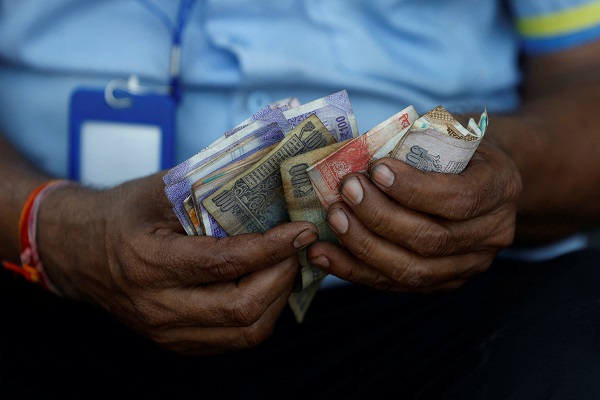
India attracted a far larger-than-expected $136.38 billion in foreign inflows through special schemes, the central bank said on Wednesday, boosting foreign exchange reserves and strengthening its ability to defend the rupee against external shocks.
The measures, unveiled in June when surging oil prices threatened to push India's balance of payments into deficit, were aimed at attracting stable dollar inflows as the country's import bill rose amid supply disruptions linked to the U.S.-Iran conflict.
The Reserve Bank of India's diaspora-focused foreign-currency deposit programme accounted for the bulk of the inflows, drawing far more than the $80 billion to $90 billion economists had anticipated.
Indian banks mobilised $127.23 billion through non-resident foreign-currency deposits, alongside $3.89 billion in external commercial borrowings and $5.26 billion in overseas foreign-currency borrowings, the RBI said in a statement.
India has frequently turned to its overseas diaspora during periods of currency stress, offering incentives such as subsidised hedging costs to attract dollar deposits. The previous such scheme, launched in 2013, raised about $26 billion.
"This is clearly larger than expectations. This should give comfort to the RBI on currency and their ability to manage volatility. Also, it helps understand why they closed the foreign currency deposit window earlier than the initial schedule," said Vivek Rajpal, Asia strategist at JB Drax Honore (UK).
Originally scheduled to close at the end of September, the RBI's dollar deposit scheme was wound up on Aug. 31 following robust inflows. A separate window allowing banks to raise funds from overseas remains open.
BOOST FOR RESERVES
The dollars raised through the scheme are swapped by banks with the central bank, adding directly to the country's foreign exchange reserves, which reached an all-time high of $729.33 billion in the week ended August 21.
The inflows give the RBI greater firepower to shield the rupee from the impact of higher oil prices and rising U.S. Treasury yields. Traders said the central bank has stepped up dollar sales in recent days to support the currency.
While the inflows have bolstered India's reserves, they also create a larger future obligation for the RBI, which will ultimately need to repay the funds raised under the schemes.
The central bank's foreign exchange forward position - reflecting its future liabilities - climbed to an all-time high of $136.7 billion in July as foreign currency deposits surged, with most funds locked in for three to five years.
"While the inflows provide an immediate and sizeable funding benefit, allowing mobilisation to expand unchecked could have created a concentrated repayment burden and heightened currency volatility at maturity," Macquarie said in a report on Wednesday.
IMPACT ON BANKING SYSTEM
The dollar inflows, when swapped with the RBI, inject rupee liquidity into the banking system, which is already awash with surplus cash.
To prevent the excess liquidity from fuelling inflationary pressures, the central bank may need to absorb part of the resulting rupee surplus, said Siddharth Kothari, economist at Sunidhi Securities.
"With a record quantum of durable U.S. dollar liquidity entering the system in a relatively compressed time frame, it would be compelling for the RBI to sterilise the resultant rupee," the economist said.
The excess liquidity could be absorbed through a two-step approach, starting with a temporary increase in the Incremental Cash Reserve Ratio (ICRR), followed by a more durable sterilisation measure through a higher Cash Reserve Ratio (CRR), or a combination of the two, Kothari added.
Banks are required to maintain a cash reserve ratio against deposits, but funds raised under the special foreign-currency deposit scheme were exempt from those reserve requirements.