Government plans Index of Service Production to track formal sector of economy
The government on Monday proposed to use aggregated GST data to monitor services sector and boost ability to assess overall economic performance.
Unlike the Index of Industrial Production (IIP), there is currently no Index of Service Production (ISP) to capture short-term movements in the services sector.
Ministry of Statistics & Programme Implementation does not require or seek access to individual unit-level returns for this data compilation.
A Technical Advisory Committee on ISP was constituted in May 2025, and has prepared an Approach Paper on compiling an ISP for the formal sector after deliberations over the past year.
The proposed approach has been developed with reference to international best practices and in consultation with members of the TAC-ISP, the statement said.
Approach Paper analyses over forty sub-sectors of the services sector in terms of availability of data on output and their suitability in terms of coverage.
The paper also discusses availability of most appropriate price deflators and methods to standardize the base of these deflators. The key sub – sectors covered include wholesale and retail trade, transport, banking, insurance, communication, hotels and restaurants, real estate, professional, scientific and technical services, arts, entertainment and recreation, etc.
MoSPI invited views and comments from experts, academicians, Central government ministries or departments, state governments, financial institutions and other stakeholders on the proposed methodology by May 5, 2026.
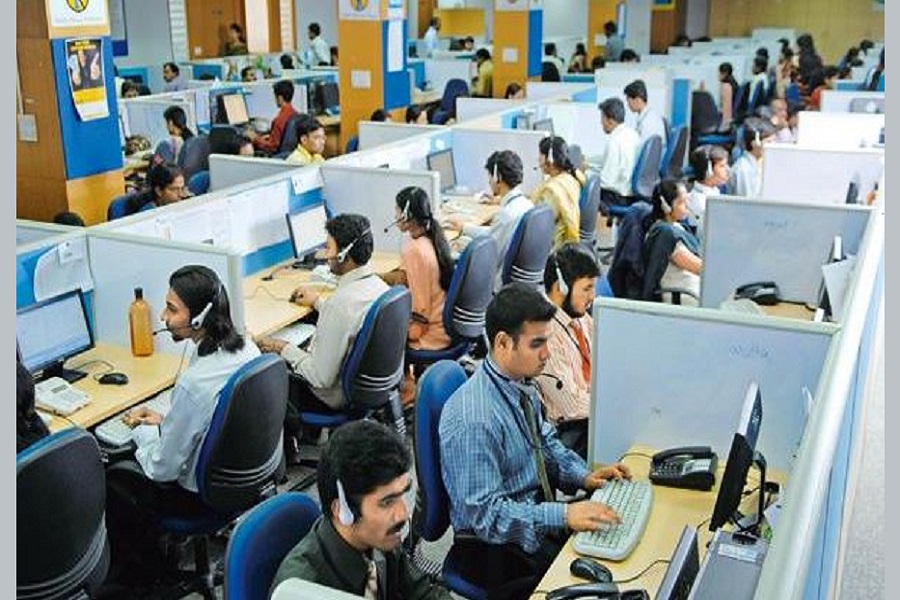
The services sector is the most dynamic and rapidly expanding segment of the economy and contributes over half of India's GDP and generates millions of jobs.
National Statistics Office (NSO), MoSPI has been grappling with the issue of compilation of Index of Service Production for quite some time and its unavailability created a critical data gap in assessing overall economic performance, the ministry said.
India's data landscape has seen a transformation recently fuelled by data demand, adoption of technology and digitalization of administrative and secondary data sources. The implementation of the Goods and Services Tax (GST) in India on July 1, 2017, marked a fundamental shift in economic analysis as monthly GST collection data acts as a powerful barometer for economic activity, the statement noted.