Features to Consider Before Buying a Smartwatch
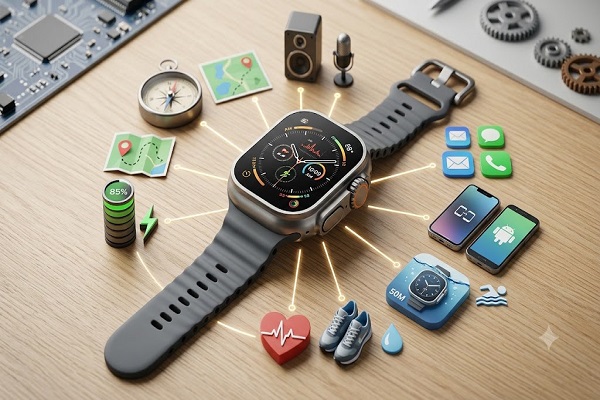
Smartwatches have evolved from simple timekeeping accessories into connected devices that can support communication, fitness, productivity and everyday convenience. With numerous models available across different price segments, choosing the right smartwatch can sometimes be confusing.
Instead of focusing only on appearance or brand name, buyers should consider features that match their daily requirements. From display quality and battery life to compatibility and health-tracking capabilities, several factors can influence the overall smartwatch experience.
Here are some important features to consider before buying a smartwatch.
1. Compatibility With Your Smartphone
One of the first things to check is whether the smartwatch works properly with your smartphone. Some watches offer broader compatibility, while others are designed primarily for specific operating systems or device ecosystems.
Before purchasing, check whether the watch supports your phone and whether all of its major features are available on your device.
2. Display Quality and Size
The display is one of the most frequently used parts of a smartwatch. Consider factors such as screen size, resolution, brightness and readability in outdoor conditions.
AMOLED displays are popular for their strong contrast and vibrant colours, while larger screens can make notifications and apps easier to view. A good display should also respond smoothly to touch inputs.
3. Battery Life
Battery life can significantly affect convenience. Some smartwatches need charging every day, while others can operate for several days or longer depending on usage.
Think about your routine before choosing a model. If you frequently travel or do not want to charge your watch every night, a longer-lasting battery may be more useful.
4. Health and Fitness Features
Health and fitness tracking has become a major feature of modern smartwatches. Depending on the model, features may include heart-rate monitoring, activity tracking, sleep tracking, blood oxygen measurements, workout modes and other wellness-related tools.
If fitness is your main reason for buying a smartwatch, compare the available sensors and supported activities rather than assuming every model provides the same level of tracking.
5. GPS and Location Tracking
Built-in GPS can be particularly useful for runners, cyclists, hikers and people who participate in outdoor activities.
A watch with independent GPS can record routes and distances without always relying on a connected smartphone. Check the navigation and location features if outdoor tracking is important to you.
6. Water Resistance
Water resistance is another useful consideration, particularly for swimmers and people who regularly exercise outdoors.
However, water-resistance ratings differ between models and do not necessarily mean that every watch is suitable for swimming, diving or prolonged exposure to water. Always check the manufacturer's stated rating and usage conditions.
7. Smart Notifications
A smartwatch can help users stay updated without constantly checking their phone. Depending on the device, it may display notifications for calls, messages, emails, calendars and selected apps.
Before buying, check whether the watch allows you to customise notifications so that only useful alerts reach your wrist.
8. Calling and Communication Features
Some smartwatches allow users to answer calls or communicate directly through the watch. Certain models also offer cellular connectivity, while others depend on a paired smartphone.
If calling is important to you, check microphone and speaker quality, connectivity requirements and whether the cellular version supports your network.
9. App and Ecosystem Support
The software ecosystem can have a major impact on the usefulness of a smartwatch. Look at the available apps, watch faces, fitness services and third-party integrations.
A smartwatch that works well with the services you already use can provide a more seamless experience.
10. Design and Comfort
A smartwatch may be worn for many hours every day, so comfort should not be overlooked. Consider the case size, weight, strap material and overall shape.
People with smaller wrists may prefer a compact design, while users who want a larger display may choose a bigger case. Replaceable straps can also make it easier to change the watch's appearance.
11. Durability
If you plan to use the watch during workouts, travel or outdoor activities, durability is important. Look for features such as a sturdy case, scratch-resistant display and suitable protection against dust or water.
The right level of durability depends on how and where you intend to use the device.
12. Storage and Connectivity
Some smartwatches offer internal storage for music, apps and other content. Bluetooth and Wi-Fi are common connectivity options, while selected models also provide cellular connectivity.
Check the connectivity options based on whether you want to use the watch independently or mainly as an extension of your smartphone.
13. Charging Convenience
Battery capacity is important, but charging design also matters. Check how the smartwatch charges, how long a full charge takes and whether the charger is proprietary or uses a widely available standard.
A convenient charging system can make daily use easier.
14. Price and Long-Term Value
Smartwatches are available across a wide range of prices. A more expensive model is not necessarily the best choice for every user.
Compare the features you actually need with the overall cost. Also consider software support, replacement straps, accessories and warranty coverage when evaluating long-term value.
Conclusion
Buying a smartwatch is about finding the right combination of features rather than simply choosing the model with the longest specification list. Smartphone compatibility, display quality, battery life, health tracking, GPS, water resistance, communication features and comfort are among the key factors worth considering.
By identifying your priorities before shopping, you can choose a smartwatch that fits your lifestyle and provides useful features without paying for capabilities you may rarely use.