Consumer prices rise to highest in 30 months in South Korea in June
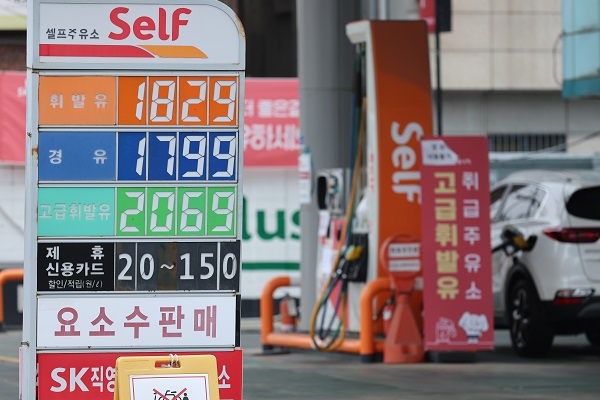
South Korea's consumer prices rose more than 3 per cent from a year earlier for two straight months in June, reflecting the lingering impact of the Middle East war on supply chains and oil prices, data showed on Thursday.
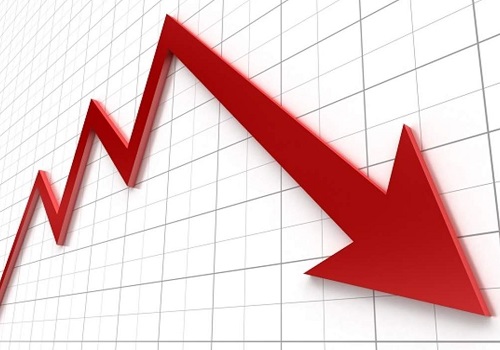
Consumer prices, a key gauge of inflation, increased 3.2 percent last month from a year earlier, according to data from the Ministry of Data and Statistics. It marked the sharpest increase since December 2023, when the figure was at the same level.
Prices of industrial products rose 4.4 percent, driven largely by higher fuel prices, reports Yonhap news agency.
The data ministry said fuel prices shot up 24.7 percent, contributing 0.93 percentage point of the overall increase in consumer prices. It was the sharpest growth since 35.2 percent posted in July 2022.
In detail, gasoline prices rose 23.1 percent and diesel prices jumped 33.7 percent. South Korea relies heavily on imports to meet its energy needs.
Prices of agricultural and fishery products rose 3.2 percent, led by increases in the prices of domestic beef and rice, which climbed 7.5 percent and 11.7 percent, respectively. The price of green onions, a staple ingredient in Korean cuisine, soared 37.1 percent.
"The cultivation area for green onions has decreased, while their growth has been hindered by the heat wave, leading to a significant increase in prices," said Lee Doo-won, director-general for economic statistics at the Ministry of Data and Statistics, at a press briefing.
Service prices increased 2.6 percent from a year earlier, with those of the public and private sectors advancing 1.6 percent and 3.4 percent, respectively, the data showed.
The private sector's increase came to 3.9 percent when excluding dining-out services, the ministry said.
The price of international flight tickets shot up 28.2 percent.
Core inflation, which excludes volatile food and energy prices, advanced 2.5 percent from a year earlier last month, the data showed.
The Ministry of Finance and Economy, meanwhile, said the government was able to limit consumer price growth to 3.2 percent through its fuel price cap system introduced in March, noting inflation would have reached 3.6 percent without the measure.
The central bank noted consumer price growth is expected to ease in July from the June level, citing the government's efforts to curb inflation.
"Consumer prices in June expanded further from May as petroleum product prices remained elevated and the increase in agricultural product prices accelerated," Deputy Gov. Lee Ji-ho said during a meeting to review inflation trends.
"Inflation is projected to remain elevated for the time being as downward pressure from lower crude oil prices will be offset by demand-side pressure stemming from economic growth," he said, noting the cost-of-living burden on vulnerable groups remains high.
Touching on the weak Korean won, a finance ministry official said the recent foreign exchange volatility has not yet affected consumer prices, noting such effects may emerge around the second half of the year.
The official also said cash handouts aimed at easing the burden on people hit by soaring fuel prices are unlikely to exert significant upward pressure on inflation.
"The subsidies are typically spent on necessities and food. Although such demand may increase, the government will also release stockpiled reserves, so the program is unlikely to add upward pressure on prices," the official said.
During a meeting with related ministries, First Vice Finance Minister Lee Hyoung-il stressed the need to make efforts to keep inflation at around 3 percent in the second half of 2026.
South Korea recently announced plans to implement discount events at local retail stores in July and August, while importing additional eggs to tame inflation.