Asia stocks attempt a rebound with central banks in the spotlight
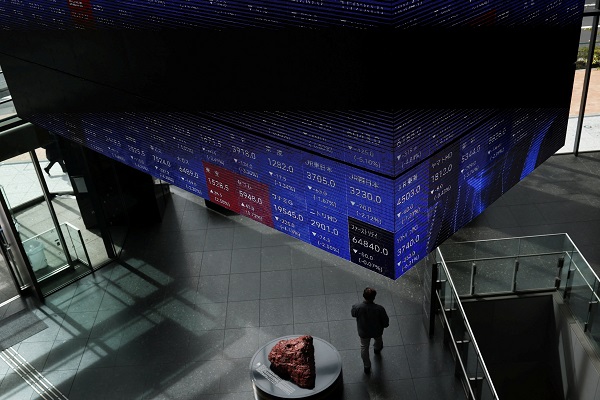
Stocks climbed in early Asian trading on Tuesday, pressing for a second day of gains as investors confronted a crowded central bank calendar and an unrelenting Middle East conflict.
Markets are on edge, trying to price in the economic damage from U.S. President Donald Trump's war with Iran and the policy reaction it could trigger.
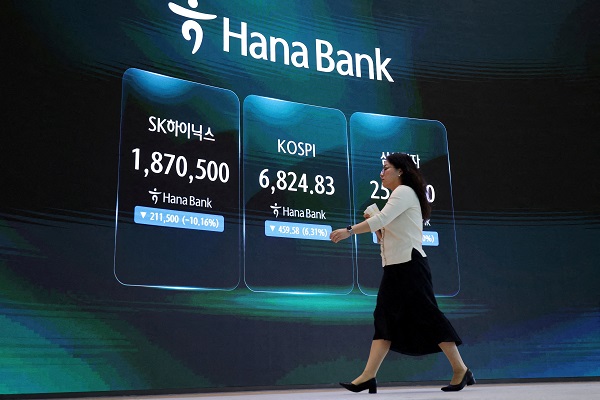
MSCI's broadest index of Asia-Pacific shares outside Japan was up 0.9%, led by a 2.4% gain for South Korea's Kospi, while Japan's Nikkei 225 rose 0.3%. S&P 500 e-mini futures slipped 0.3%.
On Wall Street on Monday, the S&P 500 rose 1.0% to snap a four-day losing streak on gains for AI stocks, though the index remains 3% below its level before the conflict began.
"The rally still has the feel of a positioning squeeze rather than the start of a new directional trend," said Chris Weston, head of research at Pepperstone Group Ltd in Melbourne. "I remain reluctant to buy dips at this stage."
Brent crude rose 2.7% to $102.89 a barrel after several U.S. allies rebuffed Trump's call on Monday to send warships to escort tankers through the Strait of Hormuz, a vital artery for a fifth of global energy shipments.
The Reserve Bank of Australia will announce its latest interest rate decision at 0330 GMT on Tuesday, with a Reuters poll of economists expecting the central bank to hike for a second time this year to 4.1%.
It is the first major central bank to meet this week, setting the tone ahead of the Federal Reserve, European Central Bank, Bank of England and Bank of Japan as they assess the global economic impact of the Iran war, even though all are expected to stand pat on policy.
The Bank for International Settlements on Monday urged policymakers not to rush reactions to the Iran crisis-driven spike in global energy prices, calling it a textbook case of when to "look through" a supply shock.
Fed funds futures are pricing an implied 99.1% probability that the U.S. central bank will remain on hold at the end of its two-day meeting on Wednesday, according to the CME Group's FedWatch tool.
The Federal Open Market Committee "is likely to defer action until it becomes clear whether the output or price effects are dominant," said Steve Englander, global head of G10 FX research at Standard Chartered in New York.
"We would be surprised if the FOMC indicated a strong direction on the impact of the war, as it has no way of knowing how long the war will last or whether the biggest response will be on activity or inflation."
The yield on the U.S. 10-year Treasury bond was up 1.8 basis points at 4.236%.
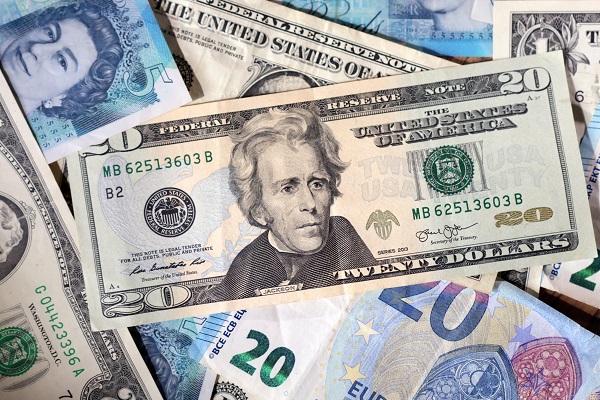
The U.S. dollar index, which measures the greenback's strength against a basket of six currencies, edged up 0.1% to 99.963 after snapping a four-day streak of gains on Monday.
The Japanese yen weakened 0.2% to 159.415 per dollar, just shy of the crucial 160 level despite verbal warnings from Japanese authorities on Tuesday.
Analysts expect the bar for an intervention to be higher because of rising oil prices. Bank of Japan Governor Kazuo Ueda said on Tuesday that underlying inflation was gradually accelerating toward the central bank's 2% target.
Gold prices held steady, up 0.1% at $5,011.53. Bitcoin advanced 2.0% to $75,705.24, while ether was up 0.7% at $2,362.25.