2026: The Insurance Outlook by Policybazaar
Life Insurance –Vivek Jain, Chief Business Officer, Life Insurance ,Policybazaar.com
“India is steadily moving towards deeper financialisation, with investors increasingly gravitating towards transparent, market-linked products. As one of the fastest-growing major economies, the country is entering a multi-year, consumption-driven phase of stable growth - creating a strong foundation for long-term wealth creation.
Right now, equity-led instruments remain best positioned to deliver meaningful outcomes over the coming decade. The year 2025 clearly reinforced a shift towards goal-based financial planning, with customers increasingly opting for long-term retirement and wealth solutions that incorporate Waiver of Premium, ensuring that critical life goals stay on track even in the face of unforeseen disruptions.
Younger investors, in particular, are showing remarkable financial savviness, with a clear preference for disciplined, long-term investing. With investment horizons of 20–30 years, equities are emerging as the core of retirement planning - capturing India’s structural growth, beating inflation over time, and allowing the power of compounding to do the heavy lifting. Disciplined equity participation is set to define successful long-term investing in the years ahead.
On the pure protection side, we are seeing a sharp rise in self-employed individuals, whose share has already grown from 12% to 20% and is likely to reach 25% soon. Demand is also deepening across Tier-2 and Tier-3 markets, alongside a clear shift towards higher sum assured and more comprehensive protection. Riders like critical illness and waiver of premium are being seen as essential components of holistic financial security, and this trend will continue this year.”
Health Insurance - Amit Chhabra, Chief Business Officer, General Insurance ,Policybazaar.com
“The year 2025 was a great year of historic reform, while 2026 is the year of historic adoption. We thank the government for the exemption of 18% GST on individual and family health insurance premiums and are grateful for a regulatory environment that has finally made “Health for All" a financial reality rather than just a goal. Zero GST has empowered households to either save meaningfully or reinvest the same budget to upgrade their Sum Insured. It has also unlocked demand in hinterlands with rising adoption of larger covers, modular plans, and EMI payments, outpacing metros.
2026 truly marks the year of health insurance. Affordability is being redefined through the lens of flexibility. By integrating modular constructs—such as EMI options, smart deductibles, co-pay and preferred partner networks—insurers are expanding the insurance umbrella to reach previously underserved income segments, ensuring that financial status is no longer a barrier to medical excellence. Renewal rates are at an all-time high, and there’s a steady influx of first time buyers Customers are increasingly opting for multi-year plans, seeking protection against premium hikes driven by medical inflation.
The industry has also moved well beyond covering only basic illnesses. Modern health plans now offer health insurance to NRI customers; include mental health care, maternity benefits, and Day-1 coverage for upto 145 medical conditions. Usage-based features that cover OPD expenses, non-payable items, and reward-linked renewals are transforming health insurance from a safety net for the healthy into a comprehensive health management tool for those on their recovery journey.
Service is the new scale. Today’s consumers view their policy as a promise of care rather than just a financial contract. With trust at the centre of the relationship, the focus has shifted to frictionless claims, hyper-responsiveness, and empathetic post-sale support.
We recognize that growth is no longer about the number of policies sold; it’s about the quality of the claims experience. By prioritizing transparency and immediate support, we are transforming insurance into a trusted companion that stands by families when they need it most."
Motor Insurance –Paras Pasricha, Head- Motor Insurance, Policybazaar.com
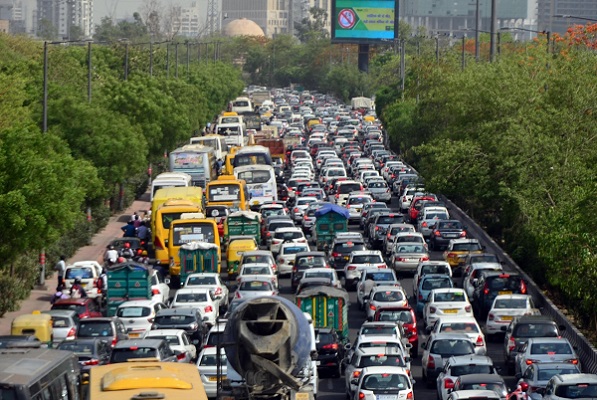
Motor insurance is moving towards insuring the driver, rather than the car. And this shift will significantly shape up the industry trends in 2026. Premiums are moving towards people and their driving behaviour based on real-time parameters and not static or blanket pricing for all. A lot of intelligence is going to pricing an individual and assessing their specific risk signals, like past driving patterns. This incentivises low-usage and lower-risk drivers by pricing them fairly.
From a regulatory standpoint, the denotification has already created meaningful headroom for product design. With motor products no longer tightly prescribed, there’s better flexibility for product innovation, structure and features. Multi-year motor policies, which were not permitted earlier, are now seeing greater traction and are likely to gain further momentum as customers look for continuity rather than annual renewal. This flexibility also allows insurers to think longer-term on pricing and servicing. A revision in third-party pricing is also expected and necessary for the system to remain viable. Third-party insurance is a social necessity tied to road safety, and its sustainability depends on realistic pricing that reflects underlying costs.
Equally important is what happens after an accident. Claims are the backbone of this industry and so, faster decisions and fewer steps are essential to make them work. With digital touchpoints enabling access and making claims management easier, the future of motor insurance will be defined by faster resolution, clearer outcomes and far less friction at the moment that matters most.”
Vishwajeet Goel, Head of Pensionbazaar.com
“Recent changes in the pension ecosystem, driven by policy initiatives, have made retirement planning more flexible and attractive. Shorter lock-in periods, higher equity exposure and easier access to accumulated savings have improved confidence among investors across age groups and created a strong base for wider adoption.
Looking ahead, 2026 is expected to see stronger participation from younger earners entering the workforce with longer investment horizons and a growing focus on financial independence. With nuclear families becoming the norm and lifespans increasing, the importance of early retirement planning can no longer be ignored. Greater flexibility is making NPS a natural starting point for long-term pension savings, while efforts to simplify onboarding are improving the overall investor experience and expanding product reach. Initiatives such as the NPS e-Shramik framework are also helping extend pension coverage to gig and platform workers through flexible, small-ticket contributions.
Along with tax benefits, retirement products are increasingly being evaluated on transparency, flexibility and long-term returns. This shift is also being reinforced by the growing interest in goal-based and early retirement planning, including the FIRE movement among younger investors.
Overall, the outlook for retirement planning in 2026 remains encouraging. Continued efforts to ease structures, combined with rising awareness, technology-led efficiencies and growing participation, are likely to strengthen the pension ecosystem and embed retirement planning as a core part of household financial planning, especially for younger and first-time investors.”
Above views are of the author and not of the website kindly read disclaimer