Jaipur Pink City Heritage Walk
Jaipur Pink City Heritage Walk: A Complete Cultural Experience of Rajasthan’s Royal Capital
Introduction
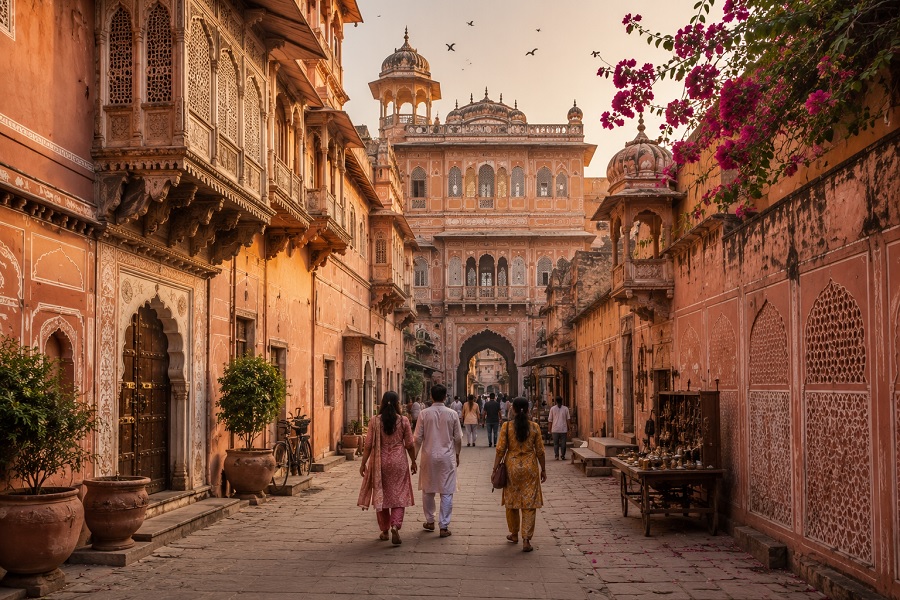
The Jaipur Pink City Heritage Walk is one of the most immersive ways to explore Rajasthan’s capital city, famously known as the “Pink City.” This guided walking experience takes travelers through narrow lanes, ancient bazaars, temples, havelis, and artisan streets, offering a real glimpse into Jaipur’s royal heritage and living culture.
Unlike regular sightseeing, this walk allows you to experience Jaipur on foot—slowly, closely, and authentically.
About Jaipur Pink City Heritage Walk
The heritage walk is a curated route through the walled city of Jaipur, which was established in 1727 by Maharaja Sawai Jai Singh II. The old city is globally recognized for its planned architecture based on Vastu Shastra and its iconic pink-colored buildings symbolizing hospitality .
During the walk, visitors explore:
Historic streets and bazaars
Ancient temples and hidden courtyards
Traditional artisan workshops
Royal-era architecture and monuments
What You Experience During the Walk
1. Historic Monuments & Architecture
You pass iconic structures such as:
Hawa Mahal surroundings
City Palace outer lanes
Jantar Mantar vicinity
Old pink-painted heritage buildings
Each structure reflects Rajput and Mughal architectural influence.
2. Traditional Markets & Bazaars
The heritage walk takes you through bustling markets like:
Johari Bazaar (jewelry and gems)
Bapu Bazaar (textiles and handicrafts)
Tripolia Bazaar (brassware and lac bangles)
These markets have existed for centuries and still retain their royal trade culture.
3. Artisan & Craft Streets
Jaipur is famous for its crafts, and the walk includes:
Gemstone polishing workshops
Bangle making units
Handicraft and textile artisans
Metal and sculpture craftsmen
This gives visitors a live demonstration of traditional Rajasthani craftsmanship.
4. Street Food & Local Flavors
Many guided walks include food tasting stops such as:
Kachori and samosa stalls
Jalebi and sweets shops
Traditional tea and snacks
Rajasthani thali experiences
Food becomes a key part of cultural storytelling.
5. Hidden Temples & Heritage Sites
The walk also includes:
Ancient neighborhood temples
Stepwells and courtyard structures
Small shrines tucked in narrow lanes
These places reflect the spiritual and cultural depth of Jaipur’s old city.
Why the Jaipur Heritage Walk is Special
Deep cultural immersion beyond monuments
Experience city life at ground level
Perfect for photography and storytelling
Guided by local experts
Discover hidden history not seen in car tours
Includes authentic food and local interactions
It is often described as a “journey through living history” .
Best Time for Heritage Walk
Morning (7 AM – 10 AM): Best lighting and fresh markets
Evening (4 PM – 7 PM): Vibrant bazaars and cultural energy
Winter months (October–March) are ideal for comfortable walking.
Future of Heritage Walk Tourism in Jaipur
Jaipur’s heritage tourism is growing rapidly due to:
Increased international cultural tourism
Instagram-driven travel trends
Sustainable slow travel movement
Government heritage conservation initiatives
Heritage walks are becoming a key part of experiential tourism in India.